




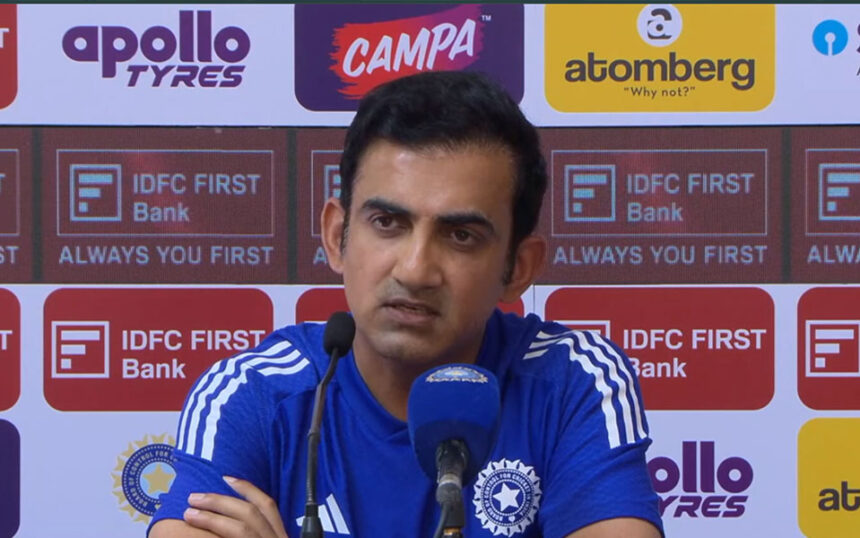

West Indies completed a record-breaking chase at the JSCA International Stadium Complex in Ranchi on October 9, 2026, reaching 252 for four wickets in 18.3 overs to overhaul India’s 249 for five. The victory levelled the five-match T20I series at 1-1. Shai Hope remained unbeaten on 102 while Sherfane Rutherford scored 84 in a 120-run partnership that proved decisive in the chase. The combined aggregate of 501 runs across 38.3 overs marked the second-highest total in men’s T20I history.
India coach Gautam Gambhir identified West Indies pacer Roston Chase’s bowling performance as the pivotal moment that shaped the match outcome. Chase took three wickets for 24 runs during India’s innings, removing key batsmen and restricting the scoring phase when India might have built a larger total. Gambhir’s assessment centred on Chase’s tactical approach and the execution of his variations on a Ranchi pitch that offered movement and bounce.
“If you look at the context of the game, it (Roston Chase’s spell) was a game-changing, match-winning spell. The way he changed his lines was important on this wicket. But against dangerous teams like West Indies, we need to find a way to defend totals,” Gambhir said at the post-match press conference.
How Roston Chase’s variations changed the game
Gambhir elaborated on the specific bowling techniques that made Chase’s performance effective against India’s batting lineup. The India coach explained how Chase’s ability to vary his approach kept the Indian batsmen guessing and prevented them from settling into a rhythm during the crucial middle overs of India’s innings.
“You have to keep changing your lines and make the batters guess. If you keep bowling the same line and length, they can settle in. He bowled at the batters’ legs, went wide and bowled full. He kept changing his approach, and those variations are very important on wickets like these,” Gambhir said.
Despite the loss, Gambhir acknowledged West Indies’ superior batting performance and refused to make excuses for India’s inability to defend their total. He emphasised that the responsibility lay with India’s bowling and fielding units to execute better against high-quality opposition, particularly when defending a score above 240 in T20I cricket.
“I don’t blame anyone or anything. The bottom line is that we could not defend 250. They batted extremely well and deserved to win. We still have a lot of work to do,” Gambhir said.
Why India could not defend 250
Gambhir also addressed the dropped catch of Sherfane Rutherford during West Indies’ chase, noting that fielding lapses are inevitable in cricket and should not become a focal point for blame. He stressed that the team needed to focus on controllable factors and improve their execution in future matches.
India vs West Indies Highlights & Review – 2nd T20I
“The toss is not in your hands. Catches get dropped; it has happened in the past and will happen in the future. Nobody drops catches intentionally, so you cannot blame anyone for that,” Gambhir said.
When asked about whether 250 represented a safe total in modern T20I cricket, Gambhir reflected on India’s strategy during the match and the quality of West Indies’ batting display. He acknowledged that while India had taken early wickets and built what seemed like a competitive score, West Indies’ aggressive approach and the partnership between Hope and Rutherford proved too strong to contain.
“I don’t know if there is a safe total. We thought 250 was a good score, especially after taking two early wickets. But credit to the West Indies for what they achieved with the bat,” Gambhir said.