


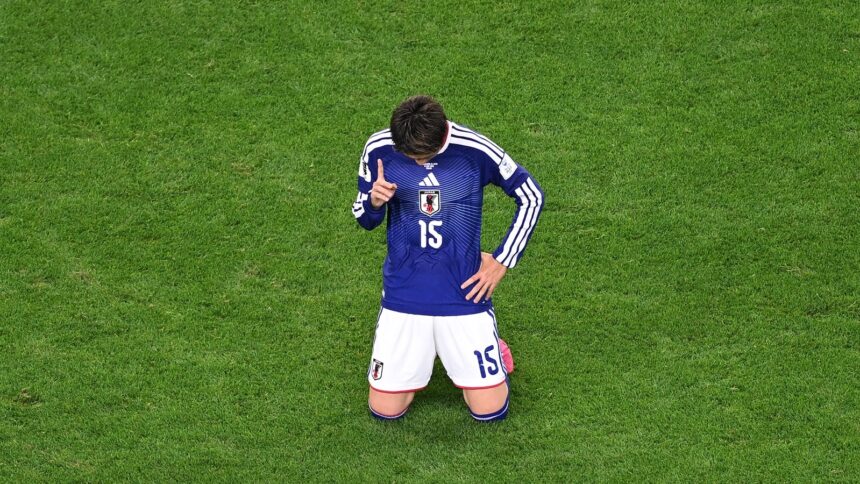
Daichi Kamada did not know much about the goal. By the time the ball brushed his forehead in the 88th minute and looped beyond Bart Verbruggen, he was already surrounded by teammates, substitutes and a pocket of supporters who sensed they had witnessed something larger than a late equaliser. He spent more than a decade in Germany, building his reputation at Eintracht Frankfurt, helping the club win the Europa League in 2022 and becoming one of the first Japanese attacking midfielders to thrive in a major European league as a creator rather than simply a hard-working runner. In many ways, his journey mirrors modern Japanese football itself: understated, intelligent and increasingly impossible to ignore. On Sunday night in Dallas, Kamada provided the final touch as Japan twice came from behind to earn a thrilling 2-2 draw against the Netherlands in one of the most compelling matches of the World Cup’s opening week. AS IT HAPPENED | Netherlands vs Japan, FIFA World Cup 2026 The contest was a meeting between two ambitious nations seeking new ground. The Netherlands are still chasing the title that has eluded them despite three appearances in the final. Japan, meanwhile, have become Asia’s standard-bearers, continuing their pursuit of a first quarter-final. By the final whistle, both had offered evidence they could go deep into this tournament. For 45 minutes, however, caution trumped ambition. The Netherlands controlled possession but resisted the urge to overcommit, wary of Japan’s pace in transition. Japan remained compact and disciplined, preferring patience over adventure. The clearest moments belonged to the Dutch, and the busiest player on the field was goalkeeper Zion Suzuki. Born in the United States to a Ghanaian father and Japanese mother, Suzuki has long been regarded as one of Asia’s brightest goalkeeping prospects. Against a Dutch side boasting Virgil van Dijk, Micky van de Ven and Cody Gakpo, he repeatedly justified that reputation. He denied Donyell Malen, reacted sharply to a powerful header and commanded his area whenever orange shirts converged around the box. The breakthrough arrived six minutes after the restart. A Ryan Gravenberch delivery found Van Dijk, whose powerful finish finally broke Japanese resistance. It felt like an inevitable reward for Dutch pressure.Story continues below this ad Yet Japan have long since stopped following other people’s scripts. Just six minutes later, Keito Nakamura exploited a rare lapse in the Dutch defence to restore parity. The equaliser injected belief into the Japanese side and transformed the rhythm of the match. Keito Nakamura (left) celebrates after scoring Japan’s opening goal with teammate Daichi Kamada during the World Cup Group F match against the Netherlands. (AP Photo/Jessica Tobias) For a spell, Japan looked vulnerable. The Dutch pressed higher, moved the ball with greater urgency and began to find the spaces behind Japan’s defensive line. It felt, briefly, like a team remembering how good they were. The Dutch responded impressively. In the 64th minute, Crysencio Summerville curled a superb effort beyond Suzuki to restore their advantage. The finish appeared decisive. Koeman’s side looked stronger physically, more comfortable in possession and increasingly likely to see out the contest. Japan kept coming.Story continues below this ad Without injured captain Wataru Endo, they pressed and probed with the confidence of a side that has spent recent years defeating established powers and shedding any lingering inferiority complex. The Dutch backline, so composed for much of the evening, found itself being asked uncomfortable new questions. Their reward arrived two minutes from time. A corner was swung into a crowded penalty area. Substitute Koki Ogawa rose highest and powered a header across goal. As the ball flashed through a sea of bodies, it appeared destined to drift harmlessly beyond the far post. Then came the slightest intervention. Kamada, stationed near the goalmouth, glanced the ball with his forehead, altering its path just enough to take it beyond Verbruggen. The Netherlands had led twice and failed to win. Japan had fallen behind twice and refused to lose. The draw leaves both teams well placed in a group that also contains Sweden and Tunisia, and offered a glimpse of why both arrived in North America with ambitions beyond merely reaching the knockout rounds. For long periods the Dutch looked the more polished side, controlling possession, creating the clearer chances and twice appearing to have the game won. Yet Japan matched them for belief, organisation and resilience.Story continues below this ad Somewhere in the Dallas night, Verbruggen was still trying to work out where the ball had gone.
How Kamada became Japan’s unlikely hero in World Cup classic vs Netherlands