



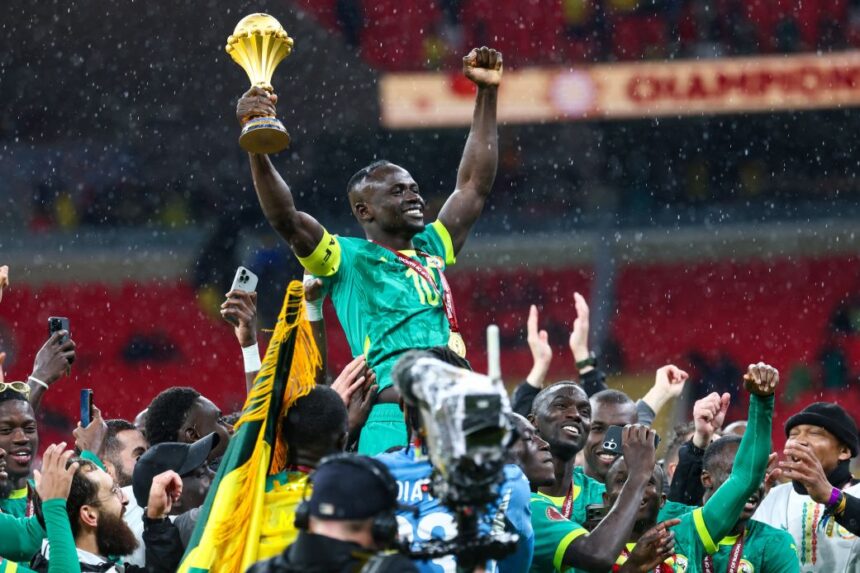
It was 59 days ago that Senegal captain Sadio Mané lifted the Africa Cup of Nations (AFCON) trophy above his head, as golden confetti fell around his exhausted Senegalese teammates.
It was also 59 days ago that Moroccan players buried their heads in their hands, not wanting to confront the reality of losing one of the most dramatic soccer finals in living history.
Despite the controversy and numerous flashpoints from that memorable night in Rabat, Morocco, the final was over. One team was jubilant, the other heartbroken. That’s kind of the point of elite sport.

But now, 59 days on, a group of suits in a stuffy meeting room somewhere has decided to overturn what took place at the Prince Moulay Abdellah Stadium.
The unprecedented decision came somewhat out of the blue, with African soccer’s governing body CAF releasing a statement on Tuesday night amidst UEFA Champions League action announcing that it had awarded Morocco a 3-0 win in the final, essentially making them AFCON champions instead.
It was a statement that shocked the soccer world, and perhaps one that shows just how out of touch those running the tournament have become.
What happened in the final?
To understand the decision, it’s helpful to recap what exactly happened in that final from eight weeks ago.
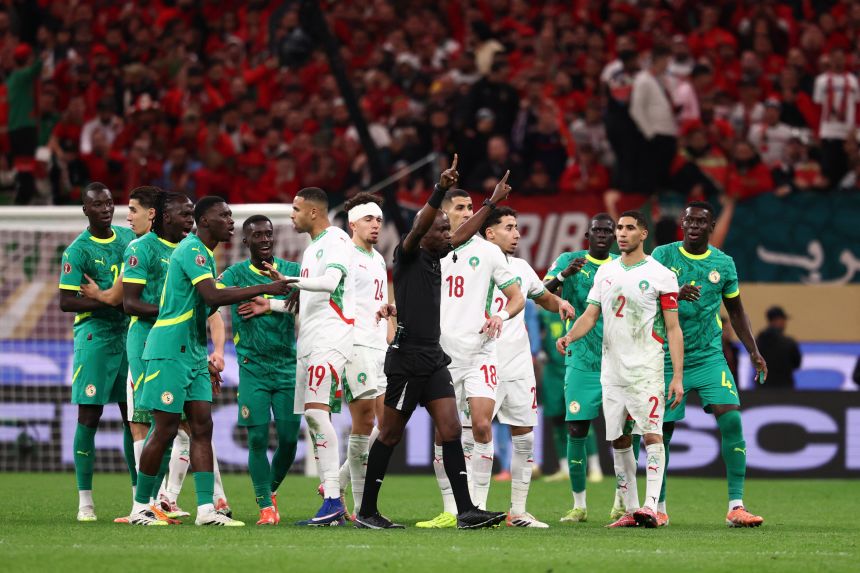
The game will be remembered most for the decision by some of Senegal’s players to walk off the pitch in protest of a penalty being awarded to Morocco in the final moments of regulation time, with the score sitting at 0-0.
The referee’s decision came just minutes after Senegal had a goal controversially disallowed at the other end, and it all contributed to an implosion on the pitch and in the stands.
<div data-uri="cms.cnn.com/_components/video-resource/instances/cmmw1cqut001o3b6rpc6rifld@published" data-component-name="video-resource" data-editable="settings" class="video-resource-elevate" data-fixed-ratio="16×9" data-canonical-url-path="/2026/01/19/sport/video/brahim-diaz-afcon-trending-cli-hrzn" data-auth-type="" data-card-url="" data-parent-uri="cms.cnn.com/_components/video-resource/instances/cmklehble00003b6maamw8kbc@published" data-video-id="me53638248e7825fa10c2d470181c866a4f6013d5e" data-media-id="me53638248e7825fa10c2d470181c866a4f6013d5e" data-bolt-id="8553800d-e2ec-5477-b285-21a4193f33ab" data-live="" data-analytics-aggregate-events="true" data-custom-experience="" data-asset-type="hlsTs" data-content-type="mediasource-clip" data-medium-env="" data-autostart="disabled" data-show-ads="true" data-source="CNN" data-featured-video="true" data-headline="Why Brahim Díaz is trending" data-has-video-player="true" data-description='<p>Morocco forward Brahim Díaz missed a penalty kick in dramatic fashion in the Africa Cup of Nations final against Senegal on Sunday. CNN’s Ben Church breaks down why so many people are calling the match the most chaotic AFCON final in history. Discover more videos, including live streams and exclusive storytelling, on our <a href="http://cnn.com/watch">Watch</a> page.</p>' data-duration="01:02" data-source-html='<span class="video-resource__source"> • Source:
<a target="_self" href="https://www.cnn.com/" class="video-resource__source-url">CNN</a>
</span>' data-fave-thumbnails='{"big": { "uri": "https://sportsupdates.in/wp-content/uploads/2026/03/cli260116-brahim-diaz-thumb1.jpg" }, "small": { "uri": "https://sportsupdates.in/wp-content/uploads/2026/03/cli260116-brahim-diaz-thumb1.jpg" } }' data-vr-video="false" data-show-html="” data-byline-html='<div
data-uri=”cms.cnn.com/_components/byline/instances/cmklehbnx00043b6m07k8va1n@published”
data-component-name=”byline”
class=”vossi-byline_elevate byline-elevate”
data-editable=”settings”
>
<div class=”byline__authors vossi-byline_elevate__authors byline__authors–hide-all-images vossi-byline_elevate__authors–hide-all-images”>By Ben Church and <div class=”byline__author vossi-byline_elevate__author”><span class=”byline__name vossi-byline_elevate__name”>Alejandro Cruz</span></div></div>
</div>’ data-timestamp-html='<div
class=”timestamp-elevate vossi-timestamp_elevate”
data-uri=”cms.cnn.com/_components/timestamp/instances/cmklehbnv00013b6mhicfk72y@published”
data-editable=”settings”
>
<div class=”timestamp__container vossi-timestamp_elevate__container”>
<noscript>
<div>
<time datetime=”2026-03-18T13:56:37.565Z”>Updated Mar 18, 2026, 9:56 AM ET</time>
<time datetime=”2026-03-18T13:56:37.565Z”>Published Mar 18, 2026, 9:56 AM ET</time>
</div>
</noscript>
<span class=”timestamp__time-since vossi-timestamp_elevate__time-since” data-first-publish=”2026-03-18T13:56:37.565Z” data-last-publish=”2026-03-18T13:56:37.565Z”></span>
</div>
<div class=”timestamp__details vossi-timestamp_elevate__details”>
<div class=”timestamp__published vossi-timestamp_elevate__published”>PUBLISHED <time datetime=”2026-03-18T13:56:37.565Z”>Mar 18, 2026, 9:56 AM ET</time></div>
</div>
</div>’ data-check-event-based-preview=”” data-is-vertical-video-embed=”false” data-network-id=”” data-publish-date=”2026-01-19T18:19:17.004Z” data-video-section=”sport” data-canonical-url=”https://www.cnn.com/2026/01/19/sport/video/brahim-diaz-afcon-trending-cli-hrzn” data-branding-key=”” data-video-slug=”brahim-diaz-afcon-trending-cli-hrzn” data-first-publish-slug=”brahim-diaz-afcon-trending-cli-hrzn” data-video-tags=”” data-breakpoints='{“video-resource–media-extra-large”: 660}’ data-display-video-cover=”true” data-details=””>


In sensational scenes, Senegal’s head coach Pape Thiaw ordered his players off the field as a way of protest. Some of his team listened and disappeared into the locker room, while a handful of others stayed on the field to try calm the situation.
After a lengthy stoppage of play, all of Senegal’s players returned to the pitch, only to watch Morocco’s Brahim Díaz miss the controversial penalty in the most spectacular way imaginable.
The Lions of Teranga then went on to score a brilliant goal in extra-time to win the final 1-0 and become AFCON champions for a second time.
There is also some wider context to consider. There had long been deep-rooted mistrust in African soccer, notably between the national federations and also between the countries and CAF.
There was, for instance, a narrative around this particular AFCON tournament that Morocco was being given favorable treatment by officials, both on and off the pitch.
It all contributed to what we saw in the final.
The fallout
Frustated by the manner of defeat, the Moroccan soccer federation (FRMF) said it would look into legal action against Senegal’s decision to temporarily leave the field, something it said “had a great effect” on the game.
In January, CAF also handed out several punishments to both Senegal and Morocco, with individual players and managers facing penalties for the unsavory scenes at the end of the match.
That, many thought, would be that. The page was definitively turned on a memorable chapter in African soccer.
But after the Moroccan federation lodged an appeal, CAF has now decided to overturn the result, dictating that Senegal had “forfeited” the match by initially walking off the pitch.
In explaining the decision, the governing body cited Article 82 of tournament’s regulations which reads: “If, for any reason whatsoever, a team withdraws from the competition or does not report for a match, or refuses to play or leaves the ground before the regular end of the match without the authorization of the referee, it shall be considered loser and shall be eliminated for good from the current competition.”
Of course, Senegal did eventually finish the game and won 1-0.
Interestingly, the FRMF initially distanced itself from the ruling, saying in a statement that it never “intended to challenge the sporting performance of the teams.” The FRMF is expected to make another statement on Wednesday.
Meanwhile, Senegal said Tuesday that it would appeal CAF’s “unfair” decision at the Court of Arbitration for Sport (CAS), the sporting world’s highest tribunal body.
Boardroom interference
But while those behind desks launch appeals and write statements, Senegal’s players took to social media to share photos of the celebrations all those weeks ago.
And that’s kind of the point.
“We know what we experienced that night in Rabat. And no one can take that away from us,” Senegal midfielder Idrissa Gueye said on social media Tuesday.
Of course, there will be some in Morocco who will welcome the decision and celebrate what to some would feel like a hollow victory because the feelings from the final have already been felt.
It was Senegal that lifted the trophy; it was Senegal that enjoyed a bus parade through the streets of its nation’s capital.
Morocco’s players, meanwhile, have spent the last two months processing the defeat. Their fans have been healing the wounds from missing out on an opportunity to properly celebrate an international trophy.
And while the disputes will likely take many months to settle in CAS, no statement from a governing body or some corporate boardroom can rewrite what happened after the final whistle in January.
Soccer is and should always be played on the pitch. Any attempts to change that will only cause more people to turn away from the game that the world fell in love with.