




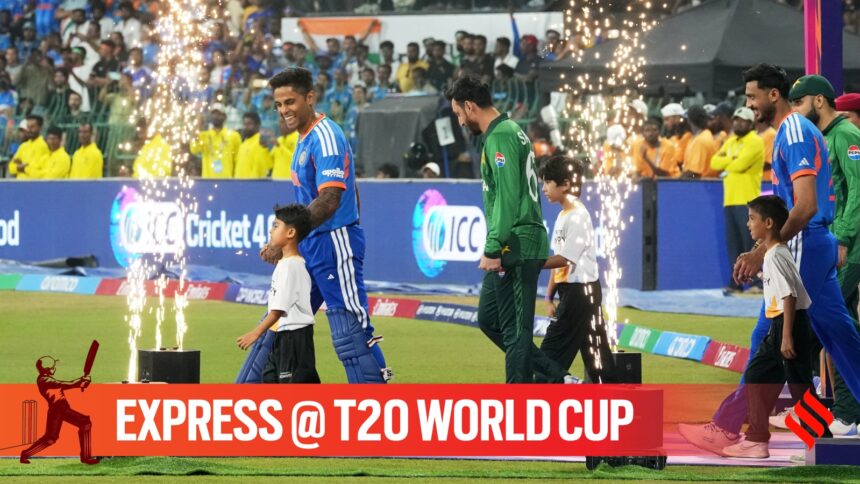
There are few certainties in an ICC event, but one that usually holds true is this: somewhere near the end, India and Pakistan are still in the mix. World Cups often build toward that familiar tension – the Asian giants hovering around the knockouts, shaping the narrative of the competition.
This time, however, the script threatens to flip.
As the Super 8 stage of this T20 World Cup reaches a decisive stretch, where they could miss the semifinals – a rare possibility that adds an unusual edge to the final round of matches.
India enter their clash against Zimbabwe in on Thursday knowing that the margin for error has all but vanished. After their opening setback in the Super 8 stage against South Africa at , the equation is simple on paper but complicated in reality: win – and win convincingly. Net run rate and other results in the group could still come into play, meaning India not only need victories but also performances strong enough to keep them ahead in a tightly-contested table.
Pakistan’s situation is no less delicate. A rain-abandoned start to their Super 8 campaign against New Zealand in Colombo followed by defeat to England by two wickets in Kandy on Tuesday has left them needing a win in their final match against Sri Lanka in Kandy on Saturday while hoping results elsewhere fall in their favour. In a short stage like this, a single washout or loss can distort the table quickly – and Pakistan are now living that reality.
It is unusual territory for two teams that have built much of their ICC tournament legacy in going deep in competitions. Yet tournaments like these occasionally produce weeks where even the biggest names find themselves chasing the format rather than dictating it.
The last time neither India nor Pakistan were in a semifinal of a global event was at the 2007 ODI World Cup in West Indies, where both sides were knocked out in the league-phase. India suffered a humbling defeat to Bangladesh in Trinidad while Pakistan were shocked by Ireland in Jamaica, the defeats leading to their eventual ouster.
Now, more than a decade and a half later, another such chapter could be written. If results over the next few days don’t go their way, the semifinal lineup of this T20 World Cup might unfold without either of its most followed teams – something global tournaments rarely see and broadcasters rarely plan for.
For now, though, the door remains open. Just barely. And that makes the next matches in Chennai, Kandy and elsewhere far more than routine games – they could end up reshaping the story of this tournament.