




On winter afternoons in Hamilton, New Zealand batsman Daryl Mitchell once studied space and tactics as a school rugby fly-half.
In Auckland gyms, the 6-foot-8 Kyle Jamieson was learning timing and elevation, and chasing rebounds on a basketball court.

And long before he was sweeping spinners in T20 leagues around the world, Tim Seifert was practising similar strokes — only with a hockey stick.
These snapshots capture something distinctive about New Zealand cricketers who face India in the T20 World Cup final on Sunday: that the foundations of their success were laid elsewhere — on rugby fields, basketball courts, golf courses, archery ranges and hockey turfs — long before the players ever stepped on the 22 yards.
Few players embody this cross-sport upbringing more clearly than Mitchell. The son of prominent rugby coach John Mitchell, he grew up immersed in rugby environments and played the sport seriously at school before committing fully to cricket.
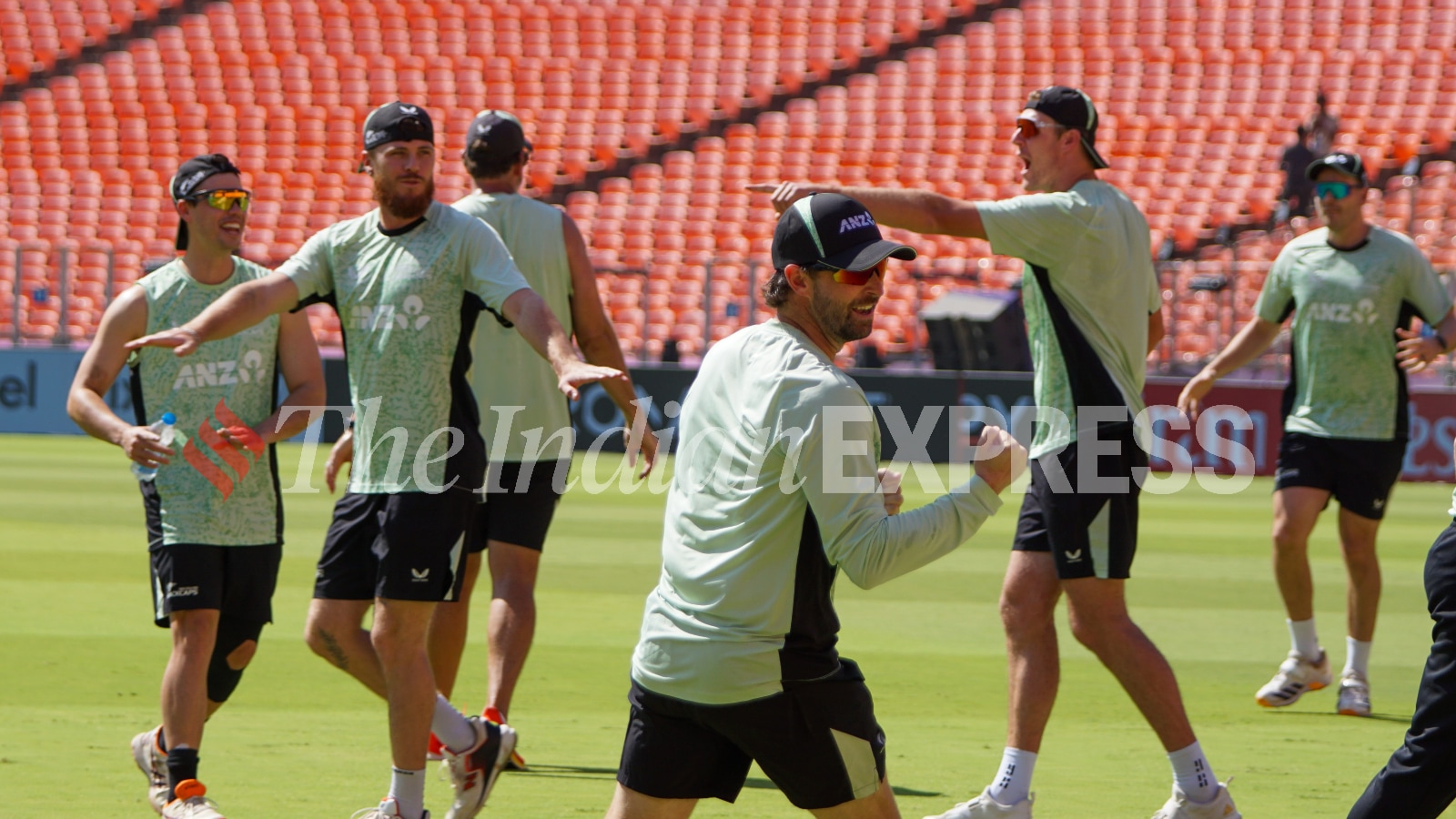 New Zealand players practice in the Narendra Modi Stadium ahead of the T20 World cup final vs India at Ahmedabad. (express Photo | Bhupendra Rana)
“Rugby requires a selfless attitude,” John Mitchell once said while reflecting on his son’s development. The lessons of teamwork, discipline and resilience from that environment, he suggested, helped shape his son’s approach to elite sport. The rugby influence still shows in his cricket. Mitchell’s powerful hitting, robust fitness levels and composure under pressure have become hallmarks of his game — qualities that feel as though they were forged as much on the rugby field as on the cricket pitch.
This pathway, however, is far from unusual in New Zealand.
The country’s sporting calendar naturally encourages crossover: rugby dominates the winter months while cricket takes centre stage in summer. Young athletes often move seamlessly between the two, building a broad base of athletic skills before specialising later in their teenage years.
For Glenn Phillips, that multi-sport philosophy is not just a childhood memory but an ongoing part of his training.
One of the game’s most explosive fielders, Phillips has been candid about his experiments with other sports to improve both physical coordination and mental adaptability. “Other sports give you insight into mindset,” Phillips explained while discussing his training routines in a past interview. “You’re using different parts of your body and learning things that you can apply back to cricket.”
Phillips has dabbled in sports ranging from golf and archery to racket sports and gymnastics. The latter helped develop the flexibility and body control that now allow him to pull off gravity-defying catches.
Basketball played a similar formative role in Jamieson’s sporting life. Before emerging as one of the tallest fast bowlers in international cricket, he spent much of his youth balancing cricket with competitive basketball. “I certainly enjoyed playing both sports growing up,” Jamieson had told this newspaper about his early career.
The two eventually became too demanding to juggle, and when he was 11 years old, he chose to pursue cricket full-time. Yet, the influence of basketball remains embedded in his bowling. The sport’s emphasis on explosive jumps, balance and landing mechanics closely mirrors the gather and leap that fast bowlers use before delivering the ball.
For a tall athlete, those skills can be crucial. They help control long limbs, maintain rhythm in the run-up and land safely after the delivery stride — all factors that contribute to Jamieson’s steep bounce and awkward angles.
Motor skills
Experts have often sworn by the benefits of playing multiple sports in the early years; developing coordination, balance and spatial awareness while reducing the risk of burnout or overuse injuries that can come with early specialisation.
Sjoerd Marijne, the Indian women’s hockey team coach, had said in an earlier interview that starting at a young age helps in developing motor skills, some of the actions performed subconsciously, like running, throwing, catching, kicking or jumping.
”Playing more than one sport makes you a better athlete,” Marijne, who comes from a Dutch sporting ecosystem that’s similar to New Zealand’s, had said. “It helps you move easily on the field and develops multiple sides of your personality.”
New Zealand’s sporting ecosystem appears to embrace that philosophy almost by instinct. Rather than pushing children into a single pathway early, schools and clubs typically allow athletes to explore several sports before narrowing their focus in their mid-to-late teens. By the time they arrive in professional cricket systems, they already possess a broad base of physical and mental skills.
The fingerprints of those early experiences are easy to spot and have shaped subtler aspects of New Zealand cricketers’ skillsets.
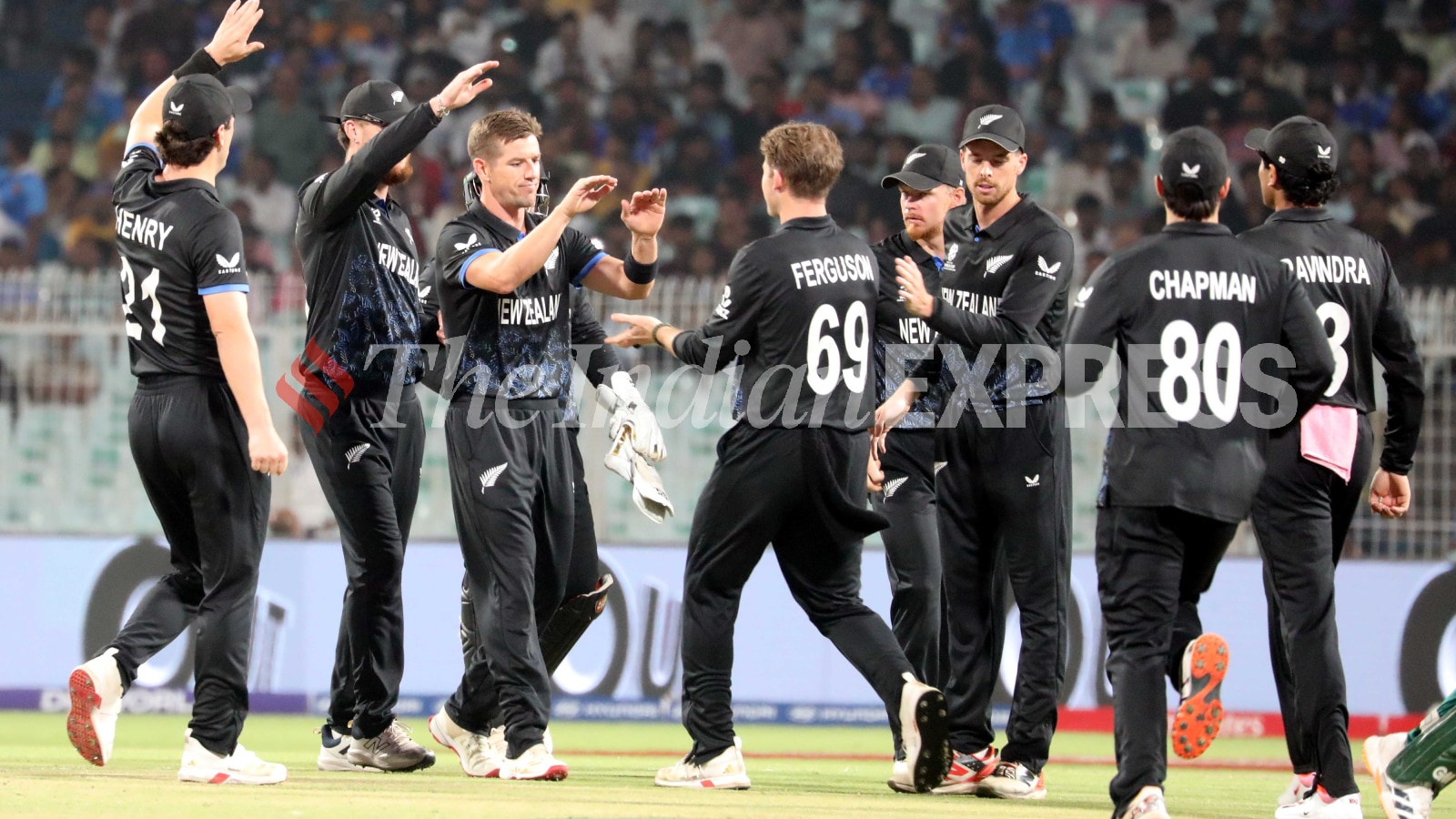 New Zealand players celebrate the fall of a South Africa wicket at Eden Gardens. (Express Photo | Partha Paul)
Take Tim Seifert, for example. The opener, who represented New Zealand Under-18 in hockey, reflected on his development during the Caribbean Premier League last year, linking his hockey past to cricket present. “My hockey background helps me play those sweeps,” Seifert had told ESPN, explaining his strength square of the wicket against spin.
Hockey’s emphasis on quick hands, low body positions and lateral movement naturally translates to cricket strokes such as paddles, reverse sweeps and late cuts. For a T20 batsman constantly searching for angles and improvisation, those instincts can be invaluable.
Seifert is not alone in that crossover. New Zealand cricket has produced several players with hockey roots over the years, including former internationals Ross Taylor and BJ Watling, both known for their strong square-of-the-wicket play.
Then there are athletes whose secondary sports shaped their mentality as much as their technique.
Captain Mitchell Santner, who describes himself as a ‘full-time golfer’ and ‘part-time cricketer’ on Instagram, developed a competitive golfing background alongside cricket. Golf’s slow, methodical rhythm, where players must repeatedly reset their focus, has often been cited as a factor in Santner’s calm presence during high-pressure moments.
It is a defining trait in his leadership, and each of those moments is a reminder that New Zealand’s cricketers are rarely shaped by cricket alone.