



Norway’s impressive run at the World Cup is yet another reminder that they’ve got this whole sport thing figured out.
Whether it’s soccer, golf, tennis or – of course – winter sports at the Olympics, a tiny nation of just 5.5 million people is now churning out world beaters at an extraordinary rate.
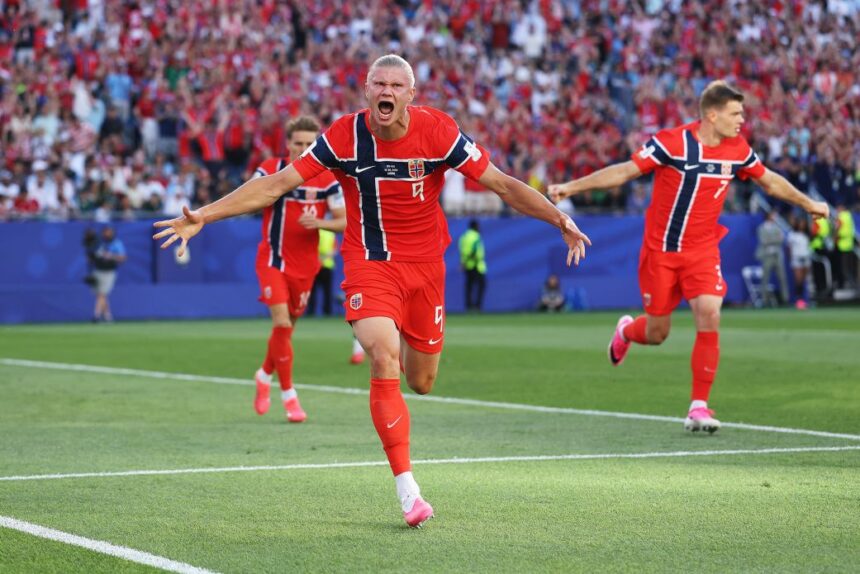
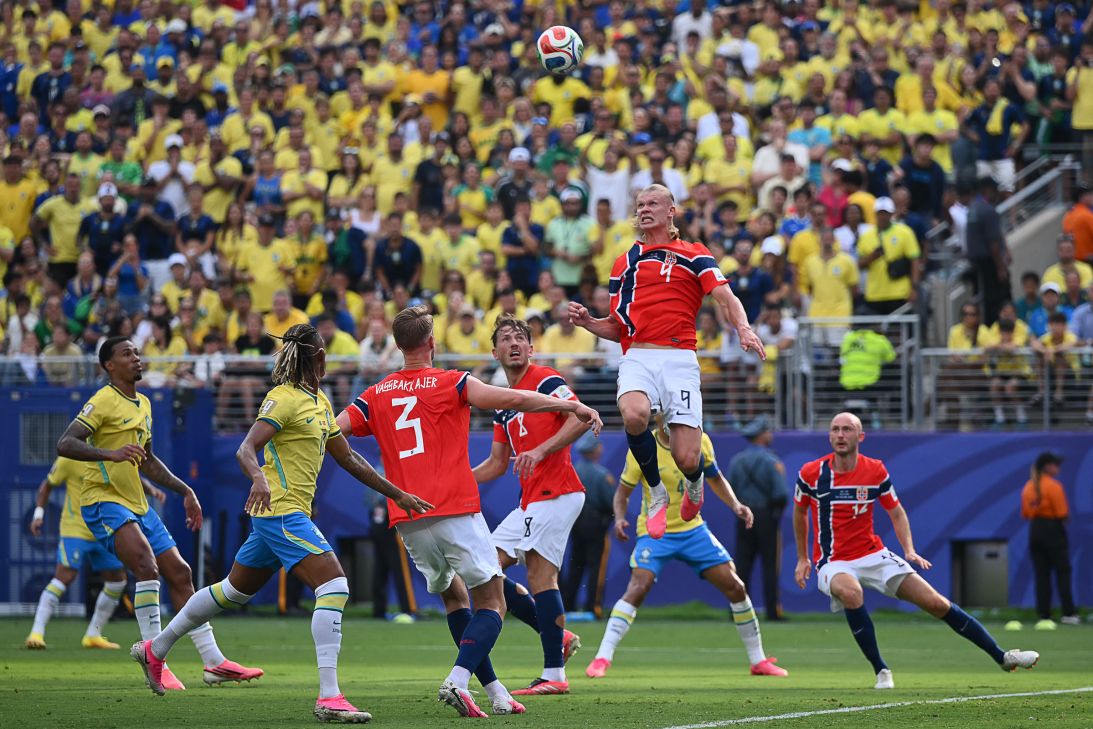
Norway’s inimitable striker Erling Haaland is the obvious star of the highlight reel, but one of the many secrets of their success can be found in stoppage time of the game against five-time world champion Brazil. In a 40-second sequence, captain Martin Ødegaard and several of his teammates frustrated their opponents by passing the ball among themselves, “showboating” against a team who invented the phrase.
⚽️ sign up for THE beautiful game by cnn sports ⚽️
- CNN Sports will give you behind-the-scenes reporting from the World Cup, expert analysis and point you towards the biggest storylines of the day. Click here to sign up for the newsletter (it’s free!).
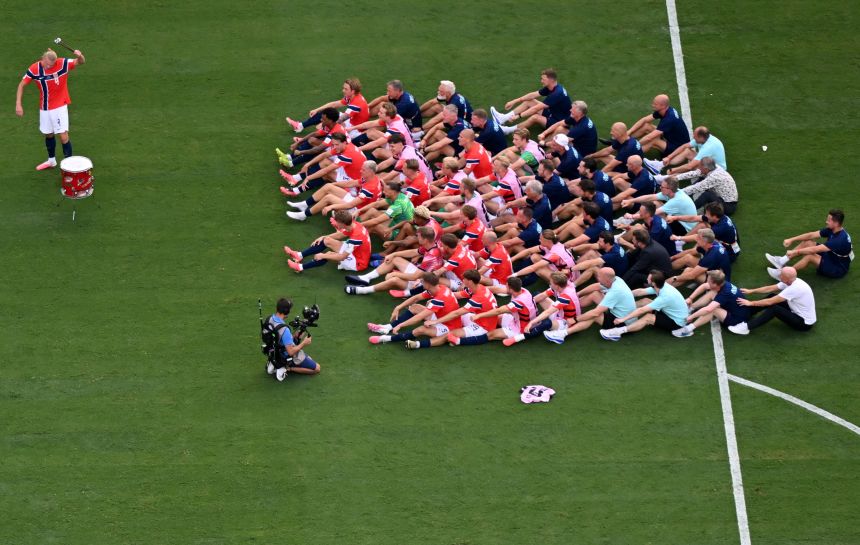
“They don’t play with pressure,” explained Norwegian podcaster Martin Sleipnes to CNN Sports. “In that sequence, they just play as if they’re teenagers on a five-a-side game, they just enjoy themselves. You can tell it by watching the body language, when the pressure goes away you are free to do whatever.”
Afterwards, Haaland explained on social media the difference between the teams.
“To have 250 million, or however many it is in Brazil, to expect you to win a football game is not easy. So, the pressure is on them, and you could kind of see that today, we just played football and enjoyed it,” he said.
In five matches between the two countries, Norway has won three times, and the Røde, Hvite, Blå is the only team that Brazil has never beaten.
The absence of pressure is deeply ingrained in the Norwegian sports culture.
“We are not concerned about winning, but about learning,” said Bodø/Glimt’s General Manager Frode Thomassen to CNN Sports earlier this year, explaining how a minnow club from a small town in the Arctic Circle had managed to beat Manchester City, Atlético Madrid and Inter Milan in its first season in the Champions League.

Now, after a 28-year World Cup absence, the national team is building on Norway’s domination of the last three Winter Olympics, leaving Milan Cortina in February with a record 18 golds and 41 total medals.
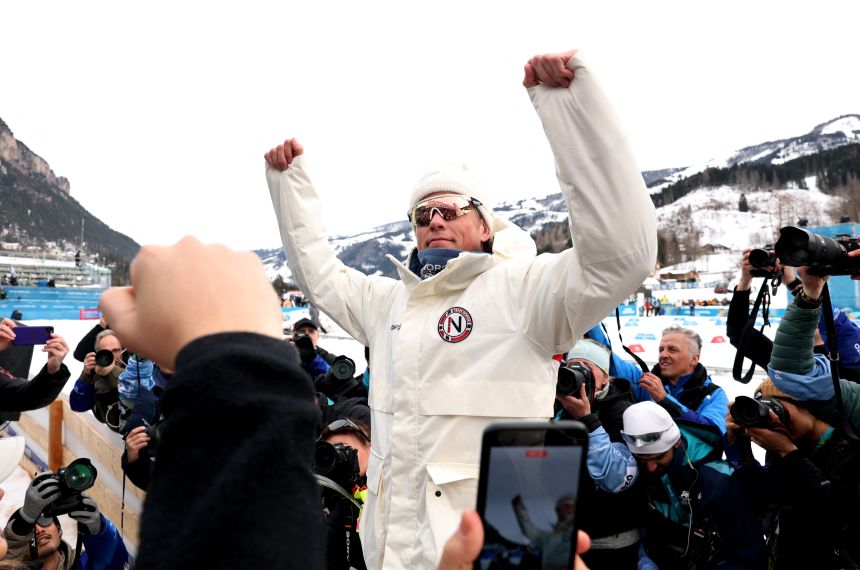
A tiny nation of roughly the same population size as the US state of South Carolina – has figured out how to keep beating countries like China (1.4 billion), the US (342 million), Germany (84 million), Italy (59 million) and Canada (40 million). Clearly, they’re doing something right, and perhaps some of their rival nations like the United States could learn something from them.
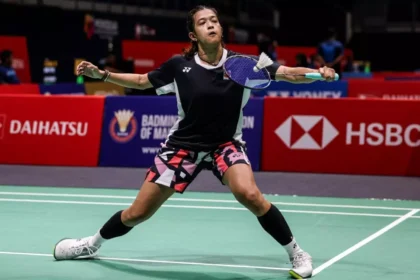
It might come as no surprise that a Nordic country would excel in winter sports, but Norway has been punching well above its weight in many sports for some time. Its triathlon program is celebrated as the best in the world, Viktor Hovland is one of the top golfers, Casper Ruud made it to world No. 2 in the ATP rankings, Haaland is in contention for the World Cup’s Golden Boot and is one of the most feared strikers in the “Beautiful Game” and Ada Hegerberg won the most prestigious individual honor in world soccer, the Ballon D’Or.
There are many reasons for Norway’s success, but there is one common theme: An emphasis on fun and enjoyment that starts at the grassroots level. If one player gets a trophy, everyone gets a trophy; they want as many children as possible to return the following season.
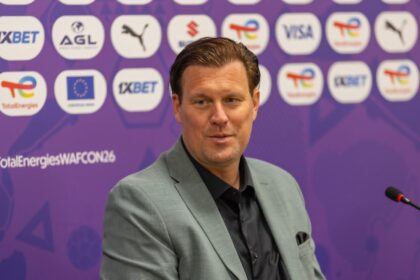
Former Norway goalkeeper Erik Thorstvedt understands the value of such an approach. He’s one of four former national team players watching his son thrive in this World Cup squad.
“We know that to enjoy football and make it the thing you like to do most in life,” he told CNN, “don’t put too much pressure on the kids.”
Until the age of 12 in Norway, nobody in youth sports is allowed to keep score, and there are no league standings either. As a result, there is far less destructive pressure and no reason to specialize too soon – young athletes are encouraged to try out multiple sports.
Bodø/Glimt’s Sondre Brunstad Fet used to beat Johannes Høsflot Klæbo in cross country skiing when he was a teenager. Klæbo, whose 11 gold medals makes him the most successful winter Olympian of all time, always thought he’d be a soccer player. A recent social media post by the Norway soccer team in June showed midfielder Patrick Berg effortlessly making a series of three-point shots on the basketball court. Alexander Sørloth played handball and he was in the national team as a speed skater at the age of 12, now he’s playing alongside Haaland as a striker at the World Cup.
Keeping top athletes engaged
Such a small country can’t afford to lose athletes whose talent might not be fully revealed until their later teens. Norwegian coaches don’t tend to mistake early bloomers for talented athletes.
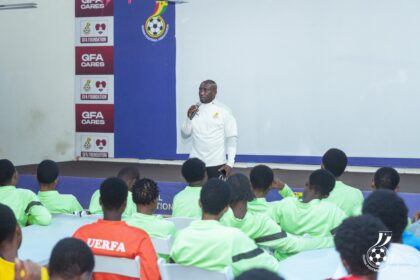
“I find that many of the big sporting systems are more occupied with getting rid of people at the young age than develop many,” explained Norway’s director of elite sport, Tore Øvebrø. “Why do I say that? It’s all about selection and selection is another way of getting rid of people. We are few. We have to take care of everybody.”
The sports development pipeline in Norway is less about trying to identify talent quickly and then turbo-charging the athletes to success, it’s more about letting them find their own way, ensuring that when they’re ready to join an elite-level program, they will make the most of it.
“When you try different sports, you also meet different cultures and that means you develop the social skills to handle different kinds of people,” said Øvebrø. “There is a broad learning base and when you have those kinds of kids, it’s easier to build a high-performance culture; they know who they are, what they want. We like the kids to feel that they are in it for themselves.”
‘It’s funny, but it’s not’
The contrast with the system in the United States couldn’t be starker.
US comedian Josh Mancuso ridiculed the American travel baseball system, which starts at the age of 7, in reel which has been seen by millions of people on Instagram.
“First tournament is a regional in South Florida,” his coach character explained. “From there, we’ll head to Costa Rica and Ecuador for two more tournaments. You’ll need bats, gloves, cleats, pants, jerseys, specialty jerseys, carts, tents, chairs, speakers. This is basically the major leagues. … It will cost $27,000 per family.”
“I think the video resonated with so many American families involved in travel sports because it’s one of those ‘It’s funny, but it’s not’ situations,” Mancuso told CNN Sports.
“Parents are smiling through the pain while spending gobs of money on tournament fees, high-end equipment and name brand swag so their 11-year old feels like a MLB All-Star. I can’t lie though, I would have loved it all when I was a little slugger.”
In every way, such programs are unthinkable in Norway, a highly egalitarian society, in which wealth and resources are distributed evenly. There are no barriers to entry in sports, nobody is priced out of participation.
Geir Jordet is the professor of psychology and soccer at the Norwegian School of Sports Sciences in Oslo. He told CNN Sports that his country’s sporting success can be summarized in three words: “Collaboration, communication and care.”
Once the elite athletes have been identified, they are helped to fulfil their potential in programs that utilize cutting edge knowledge, science and technology, including the functional use of psychology.
“The top Olympic Sports Center is 10 meters away from the Sport University where I’m currently sitting right now,” he said, emphasizing that Norway’s diminutive stature facilitates collaboration within the elite sports community.
“There’s a very strong sharing culture across sports in Norway and also from academia and from science to sport. There are very short lines of communication when it comes to knowledge. People come to that center from different sports, they meet there, they train there together, they communicate and they learn from each other.”
Putting kids first
A rising tide lifts all boats in Norway, and – whether it’s athletes, programs or sports – they cooperate with each other for as long as possible, they only compete when they must.
Author Brad Stulberg, who recently published “The Way of Excellence,” is fascinated by the Norwegian approach, especially as he contrasts it with his own experience as a parent and coach in the US.
“I think that Americans could learn a lot from the Norwegian model,” he told CNN Sports, “especially the emphasis on fun and participation over winning. The data is very clear, the number one reason that kids quit sports is because it’s no longer fun. The number two reason is because they feel too much pressure.”

When Stulberg highlighted the reasons for Norway’s success in a post on Instagram, he says that some of the responses in the comments seemed to be triggered.
“So many Americans just get deeply offended by this idea,” he explained. “It’s a lot of, like, batsh*t crazy parents who feel called out because they are on the sidelines screaming at referees at their eight-year old’s baseball game. It just makes no sense; the parents need to put the kids first. It behooves us to keep sports fun, to try to release the pressure, to develop a love for sport and then keep them in sport so that later on they can be competitive.”
Tore Øvebrø told CNN that by the age of 25, 93% of Norway’s population has been involved in some kind of organized sports. Conversely, the American Academy of Pediatrics reported in 2024 that 70% of youth athletes drop out of organized sports by the age of 13 – injury and burnout are the principal reasons why.
“Discontinuation of sports during childhood plays a role in the more than 75% of adolescents in the United States who fail to meet physical activity recommendations,” said the report.