



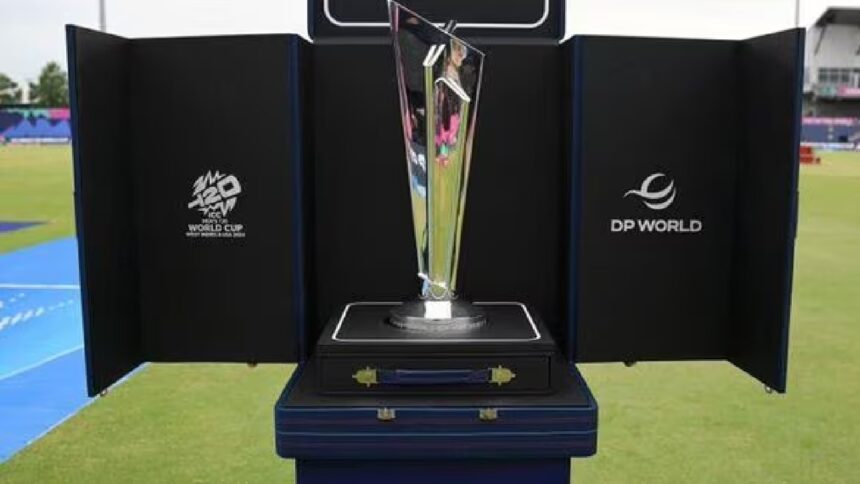
The International Cricket Council (ICC) denied on Monday that a security risk assessment had concluded that it was unsafe for Bangladesh to play its T20 World Cup matches in India. Bangladesh’s sports advisor Asif Nazrul had earlier claimed that the world body’s own security assessment had recommended that the situation was not conducive for their team to travel across the border for the tournament which starts in less than a month’s time. But ICC sources close to the developments said that the risk assigned is “low to moderate” and there has been no change to the original itinerary for the mega event. “The ICC’s independent risk assessments, carried out by internationally recognised security experts, do not conclude that Bangladesh cannot play its scheduled matches in India. The overall security risk for the tournament in India has been assessed as low to moderate, which is consistent with the profile of many major global sporting events,” the source said, adding that “the assessments did not identify any specific or direct threat to the Bangladesh team, team officials, or match venues in India.” The source expressed full confidence in the security arrangements being developed by the BCCI and Indian authorities, “who have a strong and proven track record of safely delivering major international sporting events.” It indicated that there was no chance of any alteration of the itinerary for the T20 World Cup, putting the ball squarely in Bangladesh’s court. “The ICC’s position remains unchanged. The match schedule has been finalised and published, and the ICC expects all participating teams to meet their obligations under the Terms of Participation. At the same time, the ICC will continue to engage with all stakeholders in a transparent, professional and collaborative manner to ensure the safety, security and integrity of the tournament.” Bangladesh is scheduled to play their games in Kolkata and Mumbai, and Nazrul had claimed in a press conference that the risk factor would increase if pacer Mustafizur Rahman, acquired by Kolkata Knight Riders in the Indian Premier League auction before being let go after BCCI’s instructions, was included in the squad. He added that Bangladesh supporters moving around in the national team’s jersey, with Assembly elections looming there, would also increase risk.Story continues below this ad However, an official release of the Bangladesh Cricket Board (BCB) distanced itself from the advisor and said the assessment cited by Nazrul was part of an internal communication between the BCB and the ICC’s Security Department and doesn’t constitute a formal response to the country’s request for relocation of their matches outside India. The Board said it was still waiting for an official reply on the matter. Nazrul, however, stressed that “we will not make any concessions on this issue.” But sources in the ICC said that the risk assessment was routine procedure and part of contingency planning, “rather than conclusions or determinations.”Story continues below this ad “A broad range of hypothetical scenarios is considered to ensure preparedness. These scenarios are not statements of fact, instructions, or expectations, nor do they represent conditions set by the ICC regarding team selection, supporter behaviour, or domestic political processes.” It was added that the world body has never suggested that any team should select or exclude players for security reasons, that supporters should be restricted from wearing national colours, or that domestic processes be altered in order to participate in an ICC event. Nazrul had alluded to the “extreme communal environment” in India over the past 16 months, which he claimed has made it impossible for Bangladesh to play in the country. “A sport or a tournament cannot be decided solely on the basis of market management,” he said.Story continues below this ad The world body hinted that the security plan “remains under continuous review.” “Participating members, including the Bangladesh Cricket Board, are being consulted as part of this process, and the ICC remains open to constructive dialogue and feedback to further strengthen arrangements where appropriate.”
ICC reiterates no change in T20 World Cup, refutes Bangladesh’s claim of ‘security risk’