



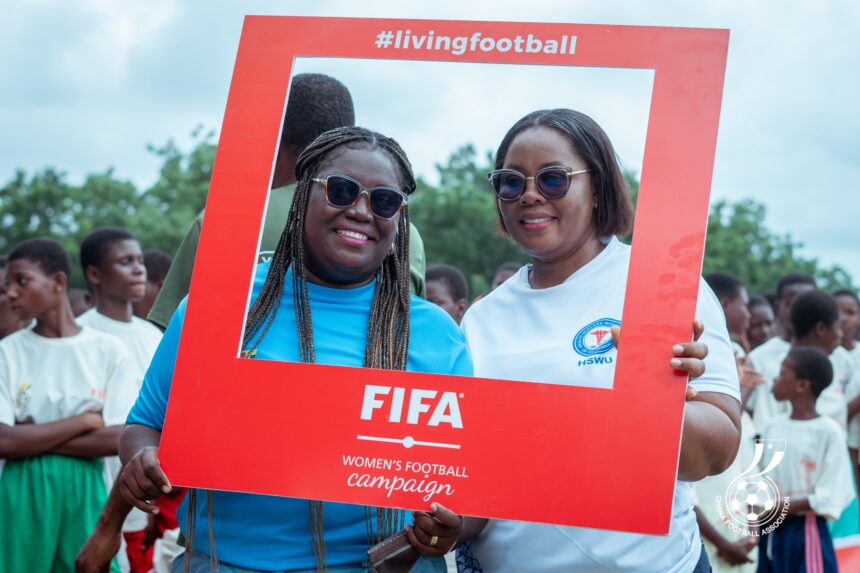
The Ghana Football Association (GFA), through the FIFA Women’s Football Campaign, successfully held its second educational session in Dabala, Volta Region, equipping young female footballers with vital knowledge on safeguarding, health and overall well-being.
The session formed part of the campaign’s holistic approach to player development, ensuring participants are empowered both on and off the pitch.
Safeguarding Education
The first session was led by Tilda Elinam Acorlor, Safeguarding Officer for the Volta Regional Football Association, who educated the girls on the GFA Safeguarding Code of Ethics and Reporting Concerns.
Participants were introduced to the principles of respect, dignity, fairness and the duty of care that underpin the GFA’s safeguarding framework.
They were also informed about the various reporting channels available within the Association and encouraged to report any incidents of abuse, bullying or inappropriate behaviour to trusted coaches, team officials, welfare officers or designated safeguarding contacts.
The interactive session reinforced the message that every girl has the right to enjoy football in a safe, inclusive and respectful environment.
Participants actively engaged in discussions, asked questions and gained a better understanding of their rights and responsibilities in promoting safeguarding.
Health and Well-being;
The second phase of the programme was facilitated by Mrs. Melody Enam Bedi, a Public Health Practitioner from Sogakope Hospital, who delivered practical health education tailored to the needs of adolescent girls.
The session covered personal hygiene, menstrual hygiene management and cervical cancer awareness.
Participants were educated on maintaining proper hygiene as young athletes, managing menstruation confidently while participating in sport, and the importance of breaking myths surrounding menstrual health.
Mrs. Bedi also educated the girls on cervical cancer prevention, highlighting the importance of the Human Papillomavirus (HPV) vaccine. She encouraged participants aged 9 to 14 years to speak with their parents, guardians and healthcare professionals about receiving the vaccine, noting that early vaccination remains the most effective means of prevention.
The session provided a safe and open environment for participants to ask questions, address misconceptions and gain confidence in making informed decisions about their health.
Building Better Footballers Beyond the Pitch
The educational programme significantly increased participants’ awareness of safeguarding structures within football while providing practical knowledge on personal health and well-being. It also reinforced the FIFA Women’s Football Campaign’s objective of developing young players holistically—physically, mentally and socially.
The GFA’s collaboration with UNFPA further enhanced the programme by ensuring participants received accurate and age-appropriate information on sexual and reproductive health and rights (SRHR), strengthening the Association’s commitment to safeguarding, player welfare and the continued growth of women’s football in Ghana.
GFA COMMUNICATIONS