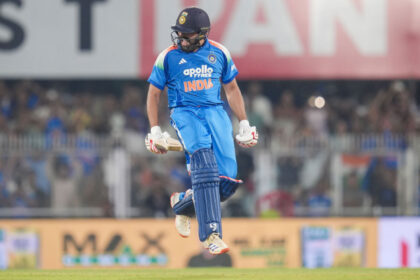




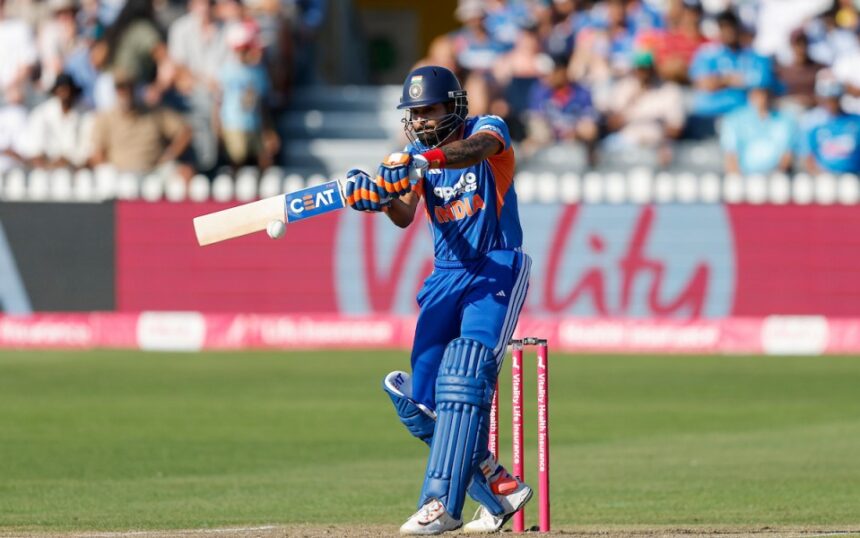

Shreyas Iyer scored 102 not out off 43 balls as India chased down West Indies’ total of 171 and won by eight wickets in the first T20 international at Ekana Cricket Stadium in Lucknow on Tuesday, October 6, 2026. The unbeaten century came off just 43 deliveries, making it the sixth-fastest T20I hundred by an India player. Iyer struck six sixes and ten fours in his match-winning innings, becoming the third Indian captain after Rohit Sharma and Suryakumar Yadav to score a T20I hundred.
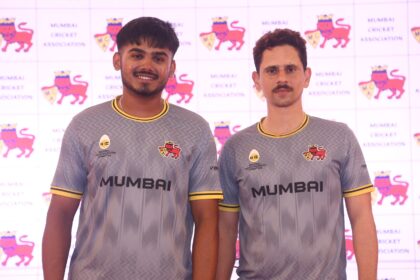
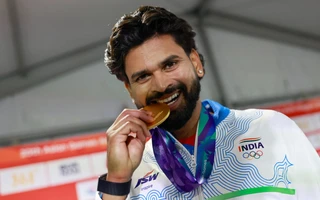
This was Iyer’s first T20 international century, though he had previously scored a Test hundred and five ODI centuries. Former India batting coach Abhishek Nayar played a direct role in the breakthrough, working with Iyer before the match to address technical concerns that had emerged during India’s gold-medal run at the Asian Games earlier in October.
“One of the things he was feeling at the end of the Asian Games was something to do with his technique, where he felt he wasn’t generating as much force while hitting and had doubts about being able to clear the boundary,” Nayar said as quoted by NDTV Sports.
Cheteshwar Pujara praises Iyer’s maiden T20I hundred
Three-pronged approach to fixing the problem
Nayar explained that the session with Iyer focused on three specific technical areas to restore his confidence at the crease. The two had worked together through Mumbai’s domestic setup, Kolkata Knight Riders in the IPL, and the national team, giving them a strong foundation for their troubleshooting discussion.
“He just felt it was certain, because we have worked and been together for so long. It was more of a technical and tactical thing. We did a bit of work on his grip and his movements that he speaks about, to get flow and momentum into his batting. And then, obviously, there were a few tactical nuances as to how he can overcome certain bowlers and situations,” Nayar said.
Iyer himself acknowledged the value of the session in his preparation. In a video shared by the BCCI, Iyer spoke about the discussion with Nayar and how it shaped his approach at the crease.
“The key that I observed in my batting was setting myself before the delivery of the ball, and that worked perfectly,” Iyer said.
Nayar admitted that the immediate success exceeded his expectations.
“Obviously, I didn’t expect it to turn out so well, but all credit to him for being able to execute it and follow through on it,” Nayar said.
The rapid translation of technical work into match performance highlighted the importance of both coaching input and player execution. Nayar clarified that the focus was not on addressing a long-standing technical flaw but rather on restoring Iyer’s confidence in his ability to clear the boundary. The work centred on giving Iyer the mental assurance he needed before attempting aggressive shots.
“But I just felt it had been a while since he had an actual technical difficulty. Thinking about it in terms of performance, that’s not how we were trying to address it. It was about giving him feedback on how he could clear the boundary rope and have the confidence to do so before he played that shot,” Nayar said.
“A lot of what happened in the Asian Games was that he felt he couldn’t generate the kind of force he wanted while trying to hit the ball, and he felt his bat swing wasn’t as clean as it had been in the past,” he added.