




The Madras High Court on November 16, 2026, granted an interim injunction restraining Blinkit, operated by Blink Commerce Private Limited, from commercially exploiting the image and persona of Chennai Super Kings superfan Saravanan Hari without his written consent. Justice P.B. Balaji presided over the case, filed under case numbers OA No. 1229 of 2026 and A.Nos. 4827 and 4828 of 2026, and found a prima facie case in favour of Saravanan, who hails from Ennore, Chennai.
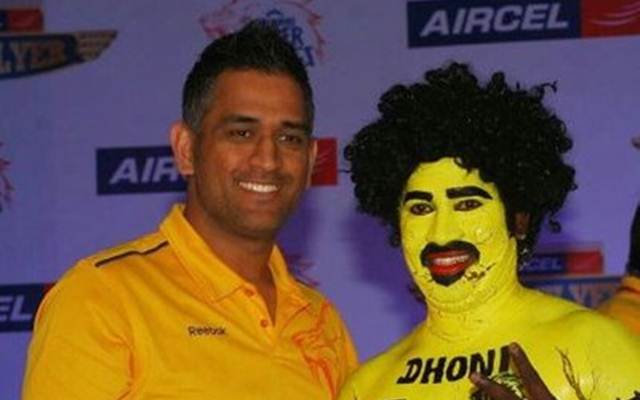
Saravanan is widely recognised at CSK matches for a distinctive appearance that includes yellow face paint, a black wig, thick moustache, red lipstick and MS Dhoni’s No. 7 jersey. He has followed CSK to matches both within India and overseas, and has cited recognition from Dhoni himself, brand collaborations and an appearance in the Tamil film GOAT as evidence of his established public identity.
Plaintiff’s counsel Aditya Vikram Bhatt argued the case on his behalf, and the court was told that Justice Balaji observed that Saravanan, though not a celebrity on the level of Sachin Tendulkar, Rajinikanth or Amitabh Bachchan, had carved a niche through his peculiar appearance at CSK matches.
“There is every likelihood that the public will be misled to believe that it is the applicant, who has been part of the advertisement, that has been published by the first defendant. Admittedly, the advertisement is a commercial venture and therefore, without the consent and prior permission of the applicant, the first defendant cannot exploit the individual personality rights that have been acquired, whatever little it may be, for commercial gain,” Balaji stated as quoted by The Hindu.
What triggered the legal dispute between Saravanan Hari and Blinkit?
The dispute arose from a full-page advertisement that Blinkit published in an English daily on March 23, 2025, without obtaining Saravanan’s consent. The advertisement featured characters whose appearance bore a close resemblance to Saravanan’s well-known yellow look, prompting him to initiate legal proceedings after pre-suit mediation between the two parties failed in February 2026.
Blinkit responded to the suit by contending that the characters depicted in the advertisement were fictional and bore no relation to the plaintiff. Justice Balaji, however, found no substance in that argument and held that personality rights are not restricted to major celebrities alone, and can extend to any person who has built a recognisable public identity. The Times of India newspaper was also named as a respondent in the case. Saravanan has sought damages of Rs 1.01 crore for the unauthorised commercial exploitation of his persona.
What are the next steps and directions issued by the court?
Justice Balaji directed both respondents to preserve all materials related to the advertisement, ensuring that evidence is available for any subsequent damages proceedings. The interim injunction remains in force until the matter is heard again, and the case has been scheduled for its next hearing on December 14, 2026.
The ruling is notable for its position that personality rights under Indian law are not confined to film stars or sporting icons. The court’s reasoning draws on the broader framework governing digital content and commercial use of individual identity, and the outcome of the December 14 hearing will determine whether the interim protection is confirmed or modified.
The Information Technology Intermediary Guidelines and Digital Media Ethics Code Rules were part of the legal context cited in the proceedings, and the Delhi High Court’s earlier jurisprudence on personality rights, including cases involving Sunil Gavaskar, formed part of the background to the arguments placed before Justice Balaji.