


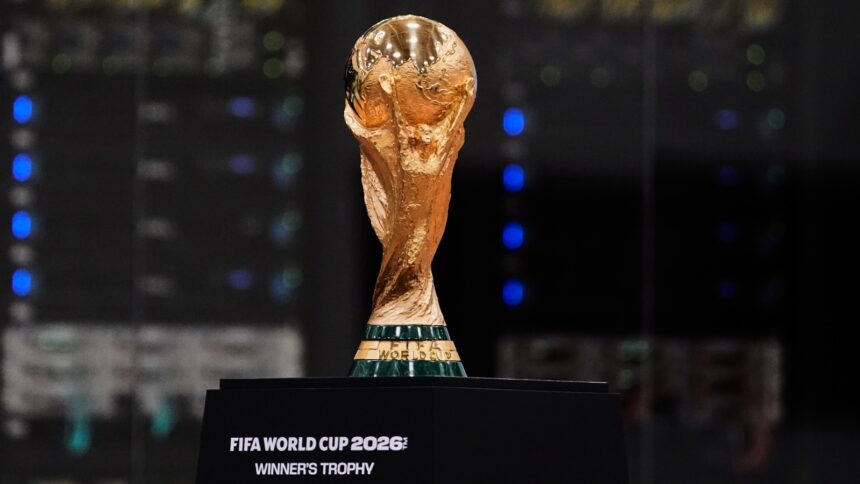
Football has always been a sport of halves. Two periods of 45 minutes, separated by a 15-minute interval. At the 2026 FIFA World Cup, that will change. For the first time, every match will feature mandatory hydration breaks midway through each half. The breaks will take place at around the 22nd minute in the first half and 67th in the second, and will be compulsory regardless of weather conditions. Consequently, football this summer will begin to resemble sports such as hockey, basketball and American football, where coaches routinely get opportunities to regroup players during the game. FIFA’s reasoning is straightforward. With matches spread across the United States, Mexico and Canada during the northern summer, heat management and player welfare have become a central concern. Rather than leave the decision to individual referees, FIFA has opted for a uniform approach. Four quarters The change effectively turns football into a four-quarter game. Instead of playing uninterrupted for 45 minutes, teams will now get a pause midway through each half. Hockey players are familiar with the concept. Coaches use quarter breaks to alter pressing patterns, reorganise defensive structures and stop momentum swings. Football managers now have something similar. Three minutes may not sound like much, but at an elite level, it is enough time to issue fresh instructions, settle players under pressure or react to tactical problems developing on the pitch. Laptops on touchline The hydration breaks could also change how coaching is done. While players can’t step beyond the touchline, USA coach Mauricio Pochettino gathered his team around a laptop on the pitch to review tactical footage during a recent game. Instead of waiting until half time, coaches can now deliver visual feedback in real time. So, analysts sitting behind the bench become more influential than ever. And the days of managers relying purely on instructions shouted out from the touchline, may be fading.Story continues below this ad Also Read | Donald Trump, Vladimir Putin and Qatar: Inside Gianni Infantino’s decade of power Ad-breaks in between a half FIFA has allowed broadcasters to show commercials during the mandatory stoppages. The rules are carefully structured. If broadcasters use split-screen coverage and keep the match visible, only FIFA partners and official World Cup sponsors can advertise. If they leave the match feed entirely, broadcasters can sell the slot to other advertisers. Moreover, the ads should not start within 20 seconds of the referee blowing for the start of the hydration break, and broadcasters must return to the action more than 30 seconds before play resumes. Super Bowl twist to the final For the World Cup final, at MetLife Stadium in New Jersey, FIFA has announced a Super Bowl-style halftime show produced alongside Global Citizen. To accommodate the performance, the traditional 15-minute half-time interval is expected to be extended significantly, almost to 30 minutes. For generations, football’s showpiece event has been built around the match itself. The 2026 final will place entertainment at the centre of the occasion as well. Number plate: 624 The World Cup has 104 matches. Each match will have two mandatory hydration breaks, one in each half. Each break will last three minutes. That adds up to 624 extra minutes across the tournament – or 10.4 hours, enough time to play nearly seven full football matches. Quote: “To be honest, I don’t like (the breaks). I don’t like it because I think you cut the rhythm of the game. I understand when you play in open stadiums, maybe yes, we need to care about the health of the players. But in this type of stadium (the venue in Atlanta) when it’s 21, 22, 23 degrees (Celsius), I think it’s the perfect time and weather to play. It annoys me a little bit, but that’s the new rule that we need to accept.” Mauricio Pochettino, USA coach Story continues below this ad “I like (them) because this is an opportunity for us coaches to speak with the team, to speak about strategy and plan. It was very good and interesting to speak with the team during these breaks.” Rudi Garcia, Belgium coach
Four quarters, 624 minutes of break: Why football won’t be a game of two halves at the 2026 FIFA World Cup