




For a long time, this stadium carried a bruise. On Sunday night, it finally healed.
India are T20 World Cup champions, beating New Zealand by 96 runs, and the Narendra Modi Stadium — the stage of one of the most painful nights in Indian cricket history — has been transformed into something else entirely. Not a place of trauma anymore, but a place of release.

For more than two years, the memory of the 2023 ODI World Cup final hung over this giant bowl like some unfinished business. A packed stadium, an unbeaten Indian team, a nation waiting to explode — and then Australia walked away with the trophy, leaving behind a silence that seemed to echo far beyond the boundary rope.
Sport remembers places. But sometimes, sport also allows places to rewrite their story. On this night, Ahmedabad did exactly that.
Before the first ball was bowled, the atmosphere already felt different. Not nervous, not haunted — just loud. Loud in the way only an Indian cricket crowd can be when hope starts bubbling again. Flags everywhere. Entire sections chanting the same two words over and over: India jeetega!
If 2023 had been the night belief slowly drained away, this was the night belief refused to leave (and as if to tap that emotion, the DJ kept playing Journey’s 1981 hit, ‘Don’t Stop Believin’ on loop). And the players felt it.
New Zealand have built a reputation in world cricket as the quiet executioners of big tournaments. Matches against them are rarely comfortable. But the team that had reached the final by out-thinking their opponents rather than overpowering them found itself buried under the avalanche of Indian runs.
There were moments when it felt like the game tilted. Moments when the crowd, all 86,824 of them, held its breath. A spell of tight bowling by Jimmy Neesham that threatened to squeeze India. A dropped catch by Shivam Dube in the first over. Tim Seifert’s back-to-back sixes in the very next over. It all felt like a momentum shift.
One could sense old anxieties flickering in the stands. Fans have long memories. They know how quickly finals can slip away. But this Indian team didn’t blink. Instead, they did something the team of 2023 couldn’t quite manage on that heartbreaking November night: finishing the job.
On a flat surface that was more suited for Formula One teams to hold their pre-season drills, India’s top three batsmen demolished New Zealand with brute force. Abhishek Sharma (52 off 21 balls), Sanju Samson (89 off 46) and Ishan Kishan (54 off 25) set the foundation before Shivam Dube’s impactful 8-ball 26, after a mid-innings wobble, propelled India to 255 for 5.
New Zealand tried making a match of it. But Axar Patel — who grew up in Nadiad, an hour-and-a-half drive from Ahmedabad — dealt an early double blow from which the Black Caps never recovered.
And then, the moment Tilak Verma caught Jacob Duffy off Abhishek Sharma — the last wicket to fall — the sound that erupted inside the Narendra Modi Stadium felt less like a cheer and more like a dam bursting.
Noise poured out of the place. Flags flew in every direction. Strangers hugged each other. Phones lit up the night as people tried desperately to capture a moment that was already too big for any camera.
For a few seconds, it felt like the entire stadium was shaking. And maybe it was. Because this wasn’t just about winning a T20 World Cup. India have won ICC trophies before. They will win more in the future. Trophies come and go in sport. What linger are the emotional landmarks.
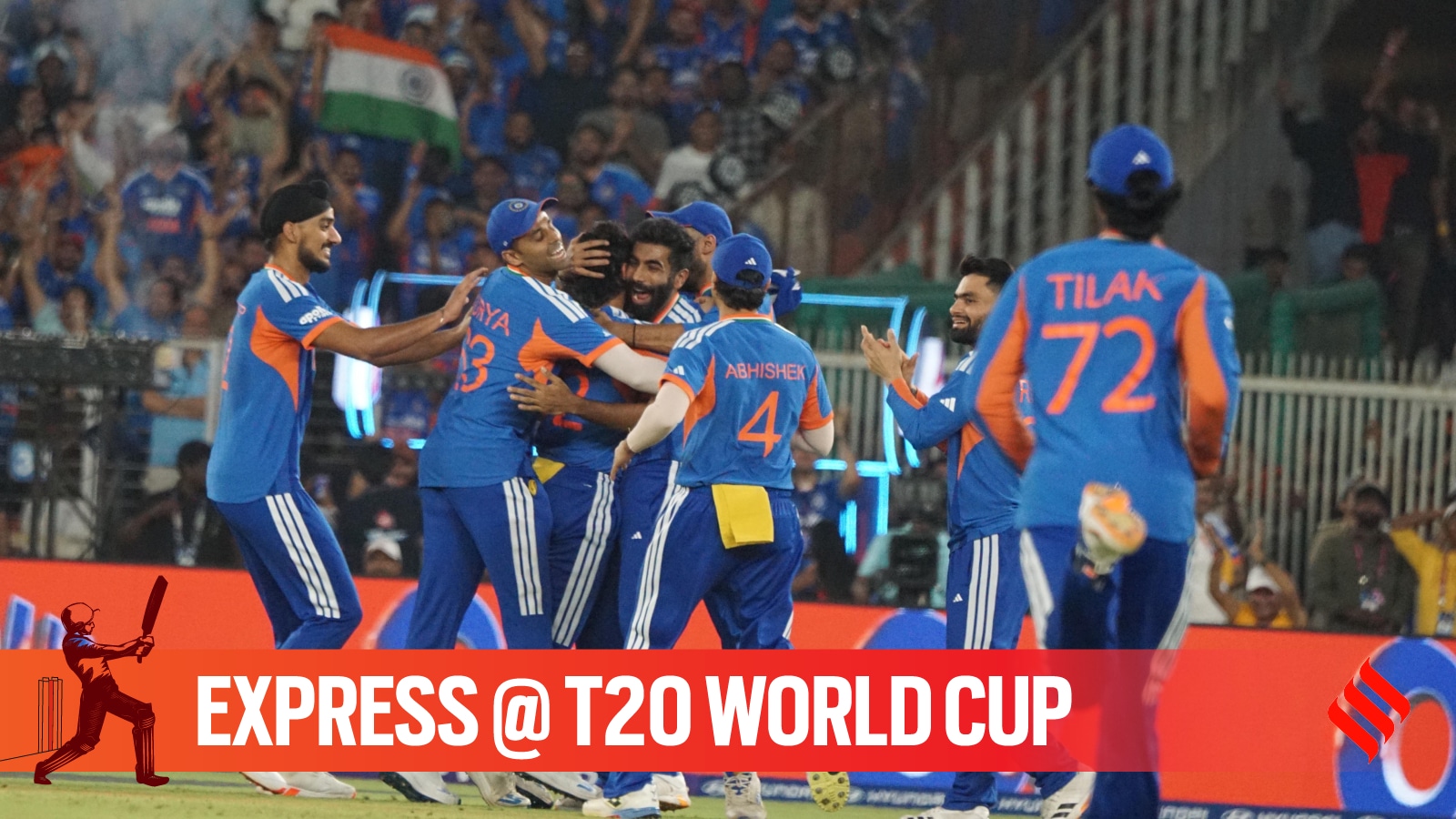 Indian cricket team players celebrate a catch against New Zealand in the T20 World Cup final at the Narendra Modi Stadium. (Express photo by Bhupendra Rana)
Brazil has the Maracanã — the stadium forever tied to the Maracanazo, the shock defeat to Uruguay in the 1950 World Cup that scarred a football-obsessed nation for decades.
For a while, Ahmedabad threatened to become cricket’s version of that story: the place where a dream collapsed in front of a home crowd. Moterazo, if you may. Instead, something else happened. Redemption.
Where there was once stunned silence, there was now thunder. Where fans had once filed quietly toward the exits, they now refused to leave, staying in their seats long after the presentation ceremony just to soak in the moment.
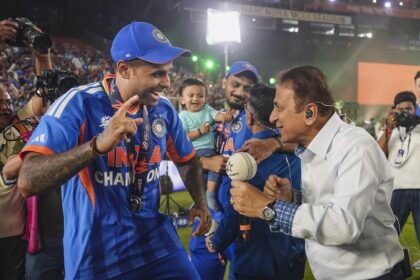
Players took lap after lap of the ground — some teary-eyed, some grinning — pointing to the stands, letting the crowd share the victory. And the crowd roared back.
It captured the strange, beautiful power of sport: the same place that once magnified heartbreak now amplified joy in exactly the same way. The same concrete, the same seats, the same floodlights — but an entirely different memory.
Ahmedabad didn’t forget 2023. It erased it.
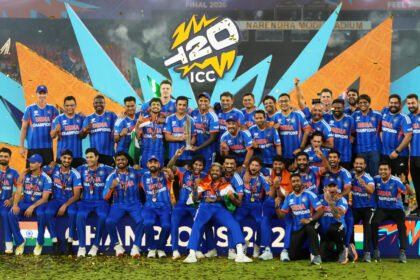
As fireworks cracked above the stadium and the Indian players gathered around the trophy, the mood in the stands had shifted from celebration to something deeper — relief, pride, a sense that a chapter had finally been closed.
Since that World Cup final, people had spoken about that night in Ahmedabad. From now on, they’ll talk about this one instead. The night India won the T20 World Cup. The night the loudest stadium in the world finally got the ending it had been waiting for.