




Can a team that survives become a team that intimidates?
On Tuesday, Gautam Gambhir watched the nets. Not saying much. Just watching. Hardik Pandya stood in one net for 135 minutes. Not smashing. Working. The bat turned in his hands. His hips wouldn’t twist fluently. Ryan ten Doeschate would meet him for a chat. Hardik would adjust, try again.

In another net, Suryakumar Yadav worked on his aggressive shots behind square leg — the ones that haven’t come with their usual regularity this tournament. Around them, everyone sweating on areas that needed work. Shivam Dube bowling a lot. Sanju Samson practising his pull shots. Preparing, not celebrating.
A month ago, before this World Cup began, the mood was different. For the first time in any global tournament, India looked like they’d finally figured out T20 cricket — the format they’d watered, nourished, and grown since 2008. Floaters in place. Everyone could hit anywhere. Drifting bowlers ready. Bumrah in fiery form. Hardik Pandya fit — the MVP to blaze with the bat and take the new ball.
The perfect blend, synchronised with contemporary T20 theory. At the helm, two men intimate with the format: Suryakumar Yadav and Gautam Gambhir.
Suryakumar has been the quiet constant. While others misfired or struggled, he scored consistently — not in his usual adventurous style, but reliably, including a crucial fifty against Pakistan when the top order folded. His captaincy has been calm, intuitive, trusting instinct over template. It isn’t the charismatic authority of a Rohit Sharma or the gung-ho intensity of a Virat Kohli. But for this group of young players, his way — almost-a-friend rather than big brother — has been exactly right.
Some of his moves might seem theatrical to older eyes. The cap removal, the bow to welcome Sanju Samson after the match-winning knock. But that’s an adult sensibility misreading a younger room. For this team, his instincts match their frequency.
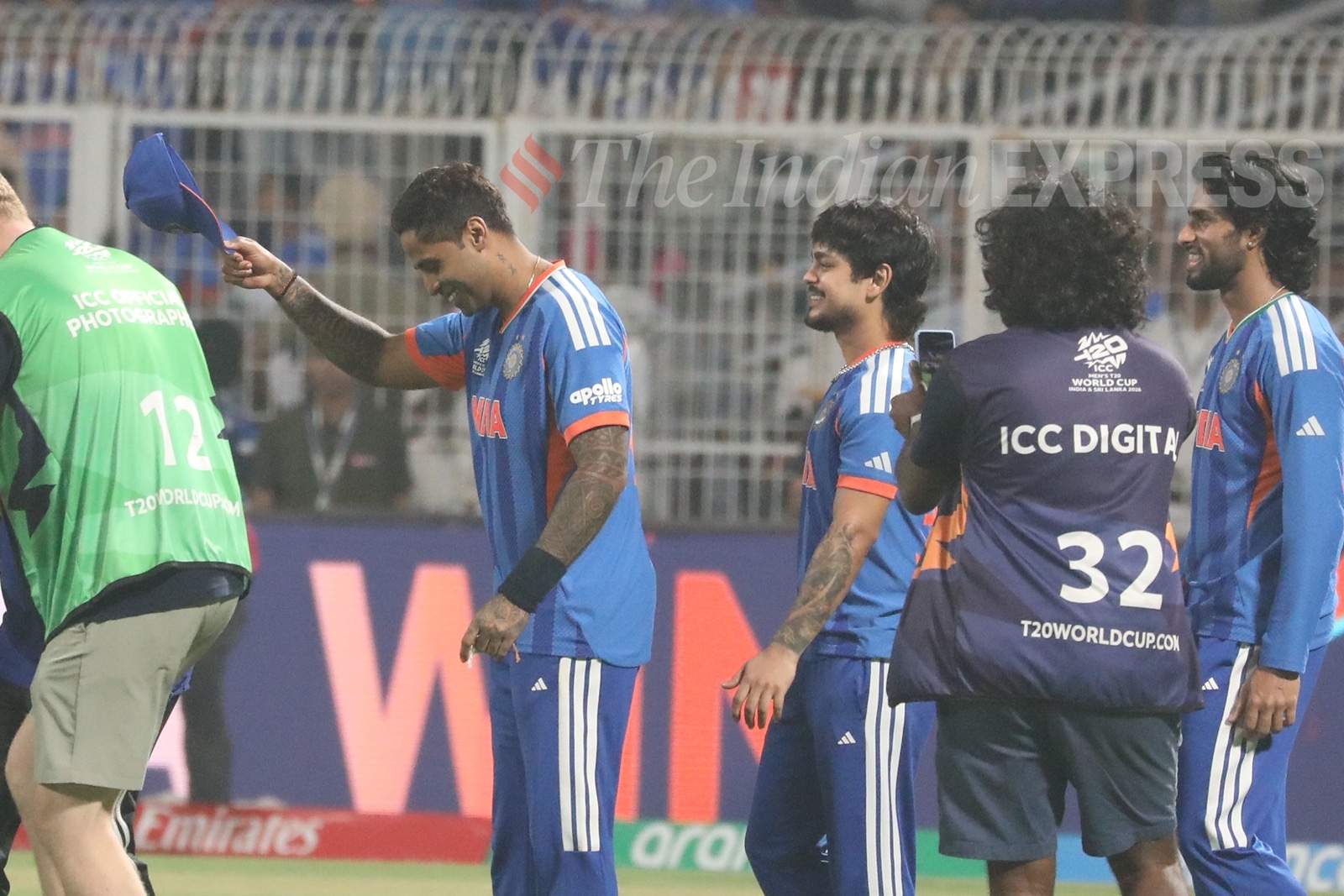 Suryakumar Yadav takes his hat off for Sanju Samson after India’s final Super Eight match against the West Indies (Express Photo by Partha Paul)
The player who redefined T20 batting with his 360-degree game now leads a team trying to rediscover its identity — and he’s doing it the only way he knows: by feel.
Gautam Gambhir has always revelled in saying he doesn’t care what the world thinks of him. The combative opening batsman turned coach speaks often about accountability, about doing things his way. He’s built his reputation on being the white-ball expert who sees what others miss. The strategist who doesn’t follow convention.
Accountability, though, is a standard that cuts both ways. With a strong team, a weakened field, and a World Cup final in reach, the man who demands results now faces his own measure. Australia went out early. South Africa are the only consistently strong side left. New Zealand have been patchy. The path is clearer than it’s been in years. For a coach who’s staked his credibility on strategic thinking, the opportunity is glaring. And unforgiving.
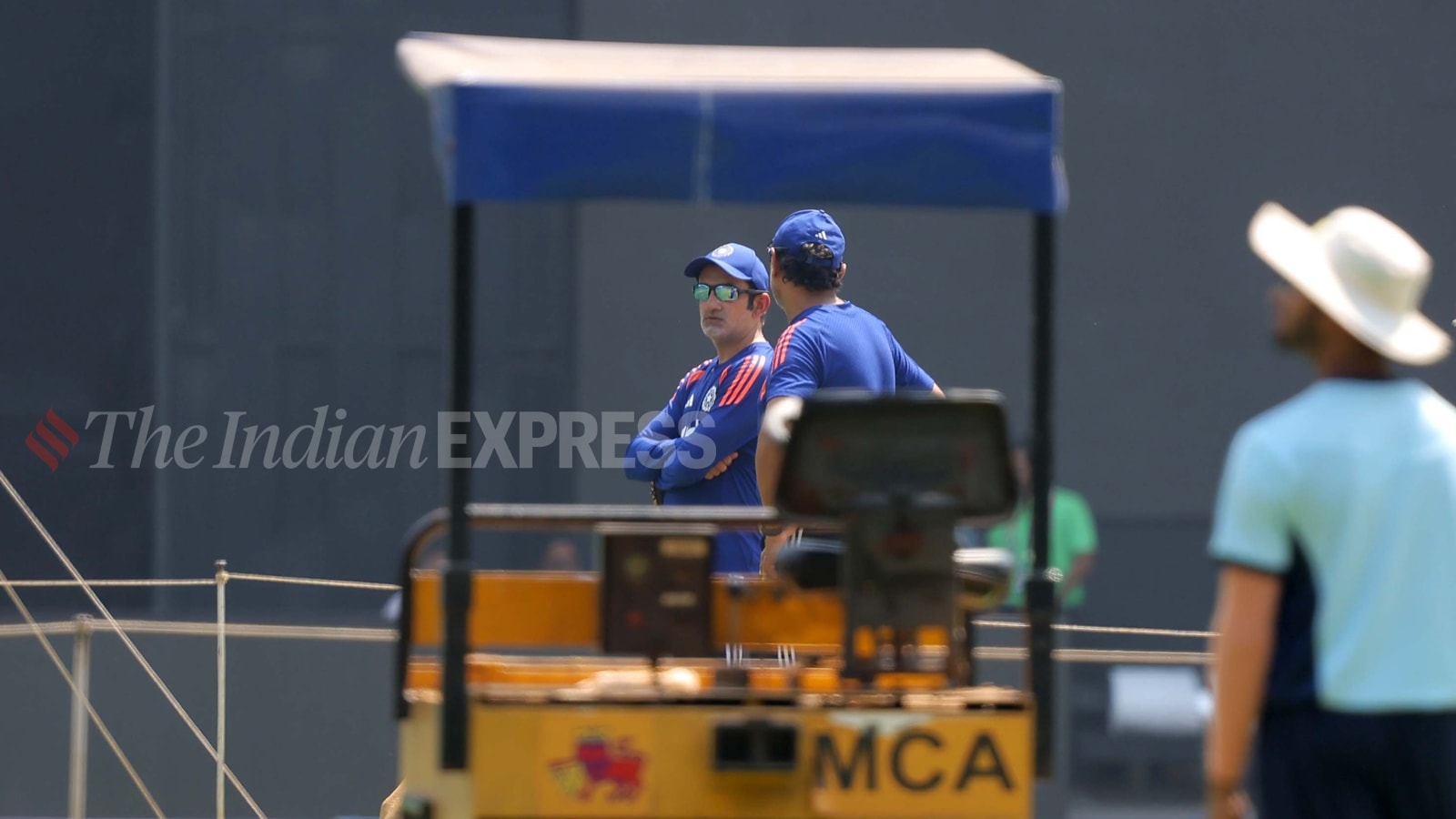 Gautam Gambhir built his reputation on being the white-ball expert who sees what others miss (Express Photo by Narendra Vaskar)
His one clear call this tournament — persisting with Samson despite the barren run — paid off. Against the West Indies on Sunday, with India struggling, Samson seized the moment. Ninety-seven runs that dragged India to the semifinals. One innings that turned the tournament.
Gambhir has spent his career not caring what the world thinks. On Thursday, the world won’t care what he thinks either. Only what he delivers.
Or did it? One innings doesn’t make a team. But it can reveal one.
***
A year ago, Rohit Sharma’s India bossed the ODI World Cup. Ten wins. Dominance. Until Australia in the final. This team has reached the semifinals quite unlike that side — through survival, adjustment, one crucial innings from a batsman who hadn’t scored in weeks.
That team knew they were good. This team is still trying to remember.
England await on Thursday. India are still expected to win. But expectation isn’t the same as inevitability. Not anymore. The circumspection shows — in the extended practice, the quiet intensity, the focus on weaknesses rather than strengths.
England are the perfect semifinal opponent for a team searching for swagger. They arrived looking broken — Buttler misfiring, the top order leaking — then Harry Brook started hitting the ball like a man settling a personal score. Will Jacks found his range. Adil Rashid, who dazzled in Sri Lanka and looked ordinary in India, remains the kind of bowler who can make good batsmen look foolish on a given day.
They’re beatable. But not pushovers. Exactly the kind of opponent India need if Sunday was truly a turning point. A test, not a coronation.
If India find their swagger on Thursday, it might come from watching their captain play the way he always has — fearlessly, instinctively, as if the scoreboard pressure doesn’t exist.
Eighteen years after Misbah lapped the ball to Sreesanth, India were supposed to be soulmates with T20 cricket. The juggernaut that was promised. First, they have to beat England.