



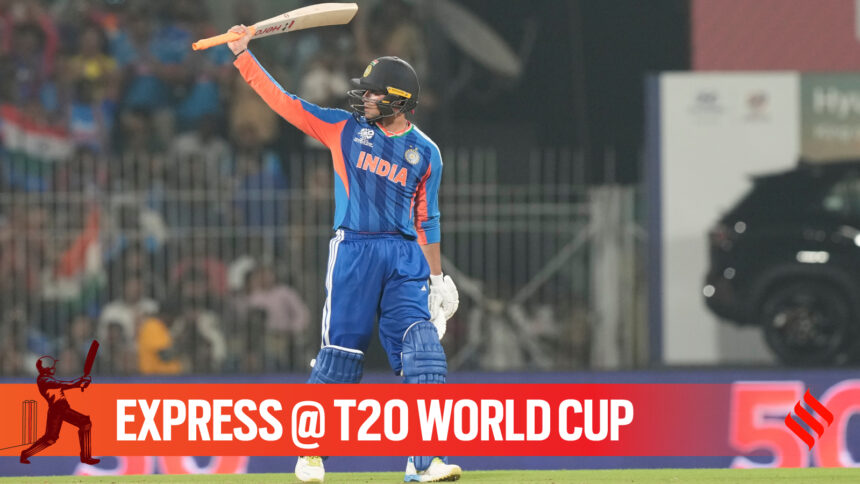
Abhishek Sharma watched himself slash. The bat swung across the line, the ball flew to third man, the left-hander walked. Next clip: same shot, different match, identical dismissal. Then another. The montage continued of cross-batted slashes accumulating like evidence.
Across the team room at Chepauk, Tilak Varma watched his own reel. The 21-year-old who had scored twin centuries in South Africa’s bouncy tracks, waiting, cutting late, playing square, now saw himself swinging early. Rushing into shots. The pre-tournament injury had made him anxious for touch. The anxiety had changed his timing.

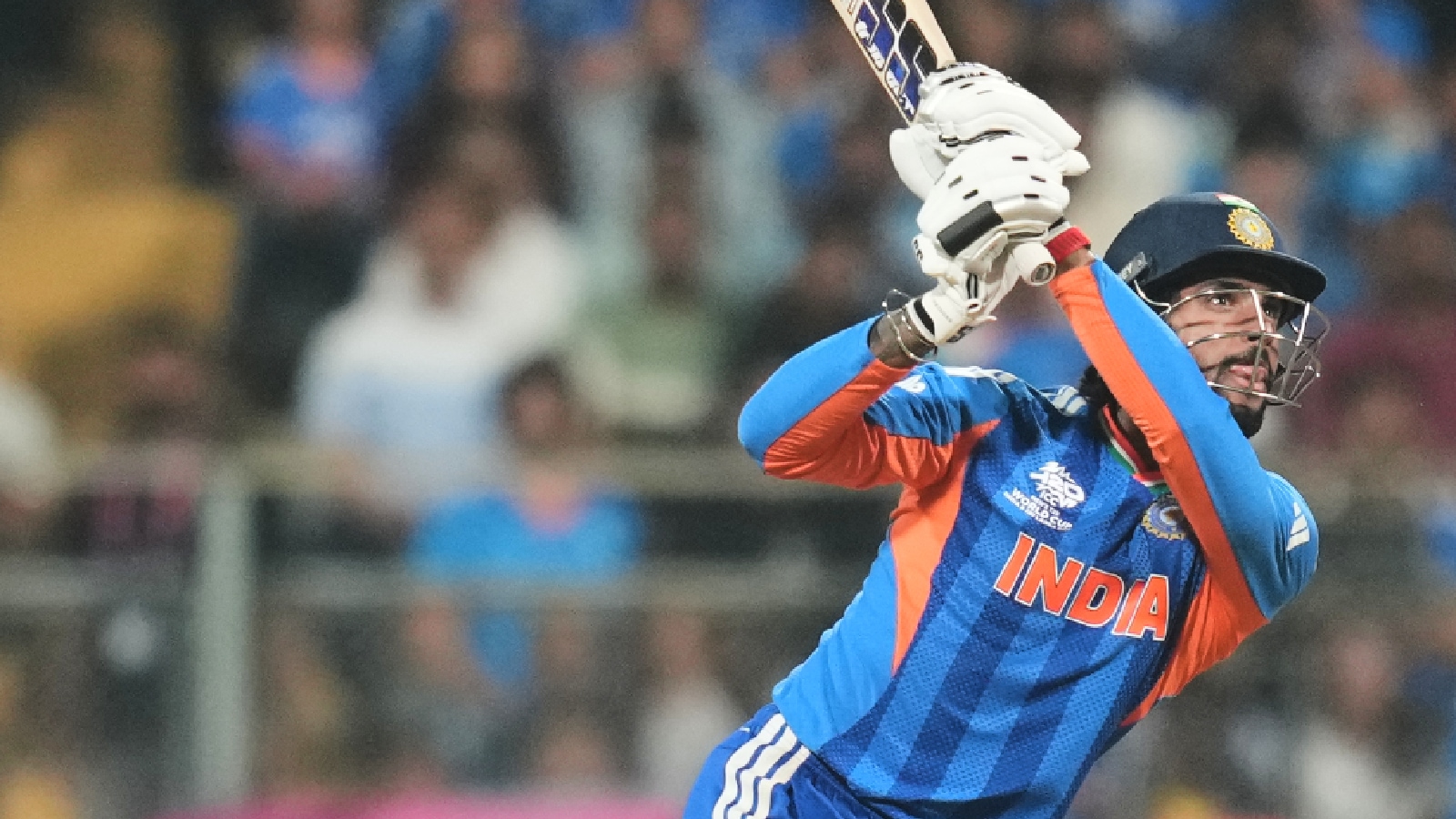 India’s Tilak Varma plays a shot during the T20 World Cup cricket match between India and the United States in Mumbai, India, Saturday, Feb. 7, 2026. (AP Photo/Rafiq Maqbool)
Hardik Pandya, who came into the World Cup in punishing form, watched himself muscle when timing would have sufficed. Power when a slice would do. Force when finesse was enough. Video analyst Hari Prasad Mohan’s compilation lasted only a few minutes. Inspirational songs threaded through it, yes, but mostly just pictures.
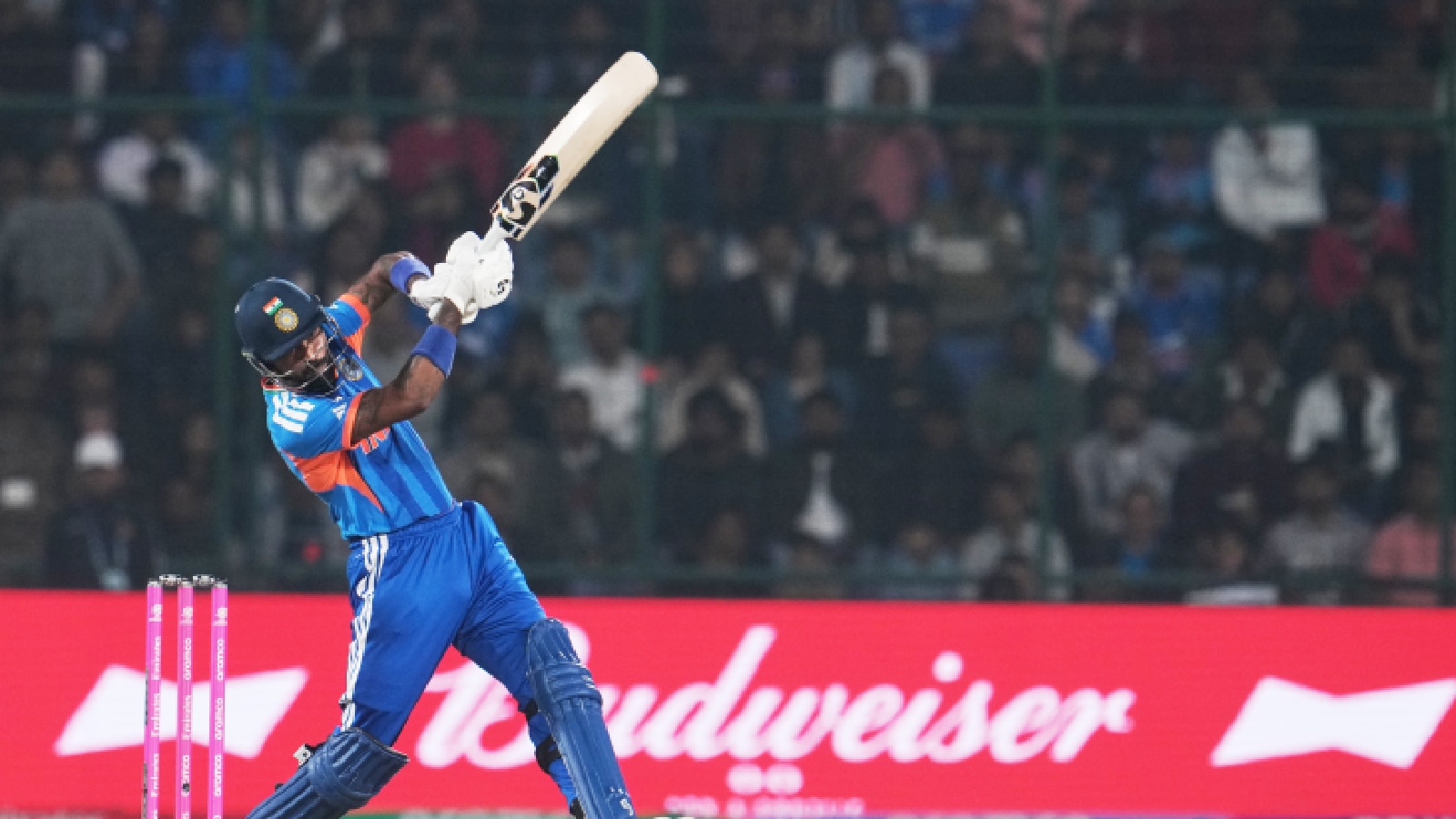 Hardik Pandya in action during game against Namibia. (AP photo)
Sharma’s slashes. Tilak’s rushed swings. Pandya’s muscled mistimings.
What you were a year ago. What you’ve become in this tournament. Head coach Gautam Gambhir and the support staff sat watching the players watch themselves. “We saw that slide, took a lot of positivity from that,” captain Suryakumar Yadav would say later. The truth was simpler: they’d forgotten who they were. The video was mirror, not motivation.
***
Against Zimbabwe the next evening, Sharma took guard: leg and middle stump. Not off stump. Not the line he’d been using since the South Africa series at home when the cross-batted slashes started becoming dismissals. Leg-middle meant fourth-stump deliveries, the ones that had been getting him out, the ones he’d been chasing with slashes were now in his swinging arc. He could hit through the line, not across it. Stay deep in the crease. His strength. His game. First ball worth hitting: through the line. Six. He didn’t chase anything outside his zone. He waited. Ball enters arc, swing. Ball doesn’t, watch it pass. Simple. The game the video had reminded him he possessed.
Seventeen sixes India hit that night at Chepauk. Their highest total at the ground. A tournament that had seen them measured, guarded, suddenly looked like the team from the highlight reel. The free-flowing blueprint missing since the World Cup began had returned. Tilak’s wagon wheel told its story without words: three boundaries behind square, three sixes to mid-wicket, one over covers. All his favourite areas. All played late, the ball coming to him, not him chasing it. The fierce cut that made him in domestic cricket. The pull that brought twin centuries in South Africa. He stood tall at the crease, let the ball arrive. Didn’t rush. Didn’t force. He scored 44 off 16 deliveries, unbeaten.
“Before the game, we discussed that we will go with a good mindset,” Tilak said afterward. “After watching videos of past games, everyone got confidence.” Not inspiration. Confidence. Recognition. Remembering what worked.
Pandya’s 50 came off 23 balls. No muscling. Just timing. When timing is his biggest strength, Pandya had realized watching the video, there’s no need for power. Slices suffice. He didn’t try to overhit. Just played on merit. The ball did the rest.
***
The left-handers had a plan against off-spin too. Not to play safely, to play with minimum risk. The difference matters. Against Aiden Markram and Glenn Phillips in the recent series before the World Cup, Sharma and Ishan Kishan had taken the safe option: hitting off-spinners through covers with the turn. In the tournament, they’d drifted away from it. They’d tried hitting against the turn instead. Mid-wicket, cow corner. Against the spin. Dismissals followed. Zimbabwe didn’t open with Sikander Raza as they usually do, but the two southpaws came prepared for the off-spin match-up. The plan was ready: covers with the turn, not mid-wicket against it. If the ball spins, use it. Play the percentages. Don’t fight physics. The video had shown them drifting from their strongest suits. Sharma chasing outside his arc. Tilak rushing his cuts and pulls. Pandya muscling instead of timing. The left-handers hitting against turn instead of with it. The video didn’t need to explain. It just showed. And they saw.
**
Wednesday evening: fifteen minutes in a team room. Players watching themselves on screen. No speeches. Just pictures. Thursday night: seventeen sixes. Rhythm restored. Blueprint recovered. The highest total at Chepauk in this tournament. India looked like themselves again. The ultimate test awaits Sunday in Kolkata. Another power-packed lineup that prefers to deal in sixes and boundaries. Batsmen versus batsmen. If India can retain what the video reminded them they possess — Sharma hitting through the line, Tilak playing square and late, Pandya trusting timing over power — there are reasons for hope. But first, they had to remember. The video analyst showed them what words couldn’t. Leg-middle guard instead of off stump. Wait for the ball instead of rushing. Play your game, not someone else’s. Hit with the turn, not against it. Sharma watched himself slash on screen Wednesday evening. Thursday night, he hit through the line instead. Leg-middle guard. Ball in arc. Swing. Sometimes the answer isn’t in working harder. Sometimes it’s in remembering who you are.