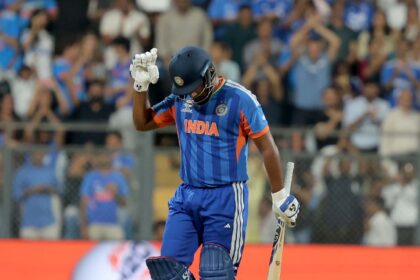




A whole generation has grown up without knowing what it feels like when India and Pakistan engage in the ebbs and flows that make Test cricket special. These days, the neighbors clash only in multilateral white-ball tournaments, remembered more for acrimony than cricket. India-Pakistan Tests have always been rare—just 59 to date. Among them, two stand apart: Bangalore 1987 and Chennai 1999. The latter, decided on this day 27 years ago by the bare margin of 12 runs, remains arguably the most memorable. What makes it unforgettable isn’t just the cricket—though with legends like Sachin Tendulkar, Wasim Akram, Saqlain Mushtaq, Waqar Younis, Anil Kumble, and Rahul Dravid on display, the match had no shortage of brilliance. It’s the context: this was the first India-Pakistan Test in nine years, played against a backdrop of tension that had everyone on tenterhooks. Yet the Chennai crowd, despite watching their team fall agonizingly short, rose to applaud the victors. As Pakistan’s coach Javed Miandad urged his team onto a lap of honor, the stands erupted in appreciation. Such scenes seem almost unthinkable today. On a knife’s edge After Pakistan scored 238 and India responded with 254, the match balanced on a knife’s edge. Then Shahid Afridi—barely a Test cricketer but pushed up as opener—came to the party. His 141 off 191 balls propelled Pakistan to 275/4, a lead of 259 with six wickets in hand. The visitors were in control. Enter Venkatesh Prasad. He ripped through the tail with 6/33, taking five of the last six wickets for just 11 runs. India had a target: 271. Daunting, but with more than two days remaining, achievable. Hope flickered briefly before Younis delivered two stinging blows late on day three, dismissing Sadagoppan Ramesh and VVS Laxman. India closed at 40/2, with Tendulkar and Dravid at the crease. The match hung in the balance.Story continues below this ad The morning after Dravid, who would later earn the nickname “The Wall,” looked on in disbelief as Akram’s delivery curved into him from over the stumps before darting away to clip the off-stump. It seemed to defy physics. When India slumped to 82/5—Azharuddin adjudged LBW, Ganguly given out despite the ball clearly hitting the ground twice—the writing appeared on the wall. But Nayan Mongia, braving a 102-degree fever in a sweater-clad Chennai afternoon, had other ideas. He and Tendulkar put on 136 for the sixth wicket, batting through the entire middle session without loss. The target crept closer. The crowd dared to believe. So close, yet so far Even after Mongia departed with 53 still needed, hope remained. Tendulkar reached his hundred and added 36 with Sunil Joshi. Victory was within sight—just 17 runs away.Story continues below this ad Also Read | Wasim Akram reveals his game-changing strategy that helped in picking Tendulkar’s wicket in 1999 Chennai Test match But Tendulkar’s back, plagued by pain, forced him into stretches between deliveries. Perhaps thinking a few big blows would finish the job quickly, he miscued Saqlain to Akram. The master batsman departed for 136, one of his most poignant innings. The last three wickets fell for four runs. Javagal Srinath’s dismissal—playing defensively as the ball spun sharply behind his feet to hit the stumps—was eerily similar to Mohammed Siraj’s wicket at Lord’s in 2023. Saqlain, having taken five in the first innings, claimed five more to script Pakistan’s triumph. For those who watched, the memory remains vivid: a match that had everything, decided by the slimmest of margins, and celebrated with grace by both victor and vanquished. It was Test cricket at its finest—and a reminder of what we’ve lost.
India vs Pakistan, Chennai Test 1999: When a Sachin Tendulkar masterclass ended in heartbreak